Introduction
As businesses increasingly rely on technology, the significance of Enterprise AI development is more pronounced than ever. Organizations are leveraging artificial intelligence to enhance productivity, streamline operations, and gain insights from data. One of the most promising advancements in this field is Retrieval-Augmented Generation (RAG), which can dramatically transform how enterprises develop and deploy AI solutions.
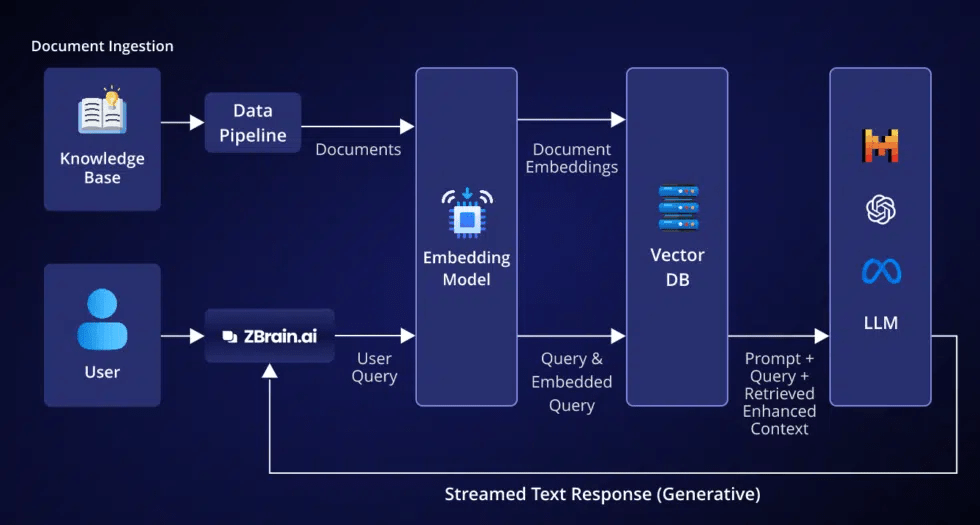
What is Retrieval-Augmented Generation?
Retrieval-Augmented Generation is a technique that integrates the capabilities of data retrieval and text generation. It enables AI systems to search through extensive datasets, retrieve relevant information, and generate coherent and context-aware responses. Unlike conventional AI models that rely on static training data, RAG dynamically adapts to new information, making it a valuable asset for organizations engaged in Enterprise AI development.
Significance of Enterprise AI Development
The objective of Enterprise AI development is to create solutions that meet specific business challenges. This encompasses automating workflows, enhancing customer engagement, and improving data analysis. As enterprises become more reliant on AI technologies, the role of RAG becomes increasingly critical. Here are several advantages that RAG brings to the table:
- Real-time Information Access: RAG allows AI systems to access real-time data, ensuring that generated responses are based on the latest available information. This capability is crucial for businesses that operate in dynamic environments.
- Personalized Interactions: By leveraging RAG, businesses can create personalized experiences for their customers. AI can retrieve customer-specific data and generate tailored responses, enhancing customer satisfaction and loyalty.
- Operational Efficiency: The integration of RAG into Enterprise AI development can significantly streamline operations. By automating data retrieval and response generation, organizations can save time and resources, allowing teams to focus on strategic initiatives.
Accelerating Development Processes
One of the most significant benefits of utilizing Retrieval-Augmented Generation is the acceleration of development processes. Traditional AI models often involve lengthy training periods and extensive data preparation. In contrast, RAG enables quicker iterations and faster deployment.
- Rapid Development: RAG allows teams to develop and test AI applications swiftly. The ability to retrieve relevant information quickly means that developers can build and refine models in shorter time frames.
- Enhanced Flexibility: Businesses can pivot their AI strategies with ease. The capability to access real-time information enables organizations to adjust their AI applications to meet evolving business needs effectively.
Practical Applications of RAG in Enterprise AI Development
Numerous sectors can leverage RAG to enhance their AI capabilities. Here are some practical applications:
- Sales and Marketing: RAG can assist marketing teams in generating content based on the latest trends and customer preferences. This ensures that marketing materials are relevant and engaging.
- Human Resources: In HR, RAG can streamline recruitment processes by retrieving candidate information and generating insights into potential hires. This can enhance decision-making and improve hiring outcomes.
- Product Development: RAG can support product teams by retrieving user feedback and generating actionable insights, allowing companies to refine their products based on customer needs.
Potential Challenges and Solutions
While the benefits of RAG are substantial, organizations must navigate certain challenges. Data governance is a critical concern, particularly in industries that handle sensitive information. Companies should implement robust data management policies to protect against data breaches and ensure compliance with regulations.
Additionally, there is a need for skilled personnel who can effectively implement and manage RAG systems. Investing in workforce training and education will be essential for maximizing the benefits of RAG in Enterprise AI development.
Conclusion
In conclusion, Retrieval-Augmented Generation represents a significant advancement in the field of Enterprise AI development. By providing real-time data access, enhancing personalization, and accelerating development processes, RAG equips organizations with the tools needed to thrive in an increasingly competitive landscape. As businesses continue to explore AI technologies, the integration of RAG will be pivotal in driving innovation and achieving strategic goals.
 Tech Consultancy Blogs
Leave a comment