Introduction
In today’s digital era, customer service is undergoing a transformation, with AI agents leading the change. These intelligent systems are designed to interact with customers, resolve issues, and provide personalized experiences—all without human intervention. AI agents in customer service are reshaping how businesses interact with customers, driving faster resolutions, and significantly improving customer satisfaction.
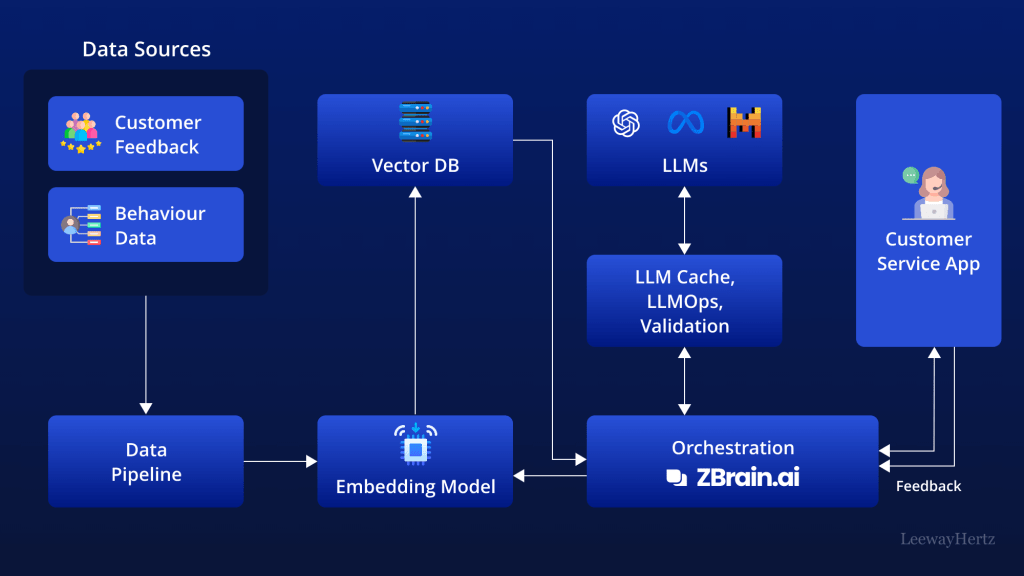
Understanding AI Agents in Customer Service
AI agents in customer service are software systems powered by artificial intelligence that can engage in meaningful interactions with customers. They handle inquiries, troubleshoot common issues, and even suggest products or services, all in a human-like manner. These AI-driven agents use natural language processing (NLP) and machine learning to understand and respond to customer questions. With AI agents, companies can provide 24/7 support and handle large volumes of customer requests more efficiently.
For example, instead of waiting in line for a human representative, customers can interact with an AI agent who instantly addresses their concerns, offering a seamless customer service experience. This shift to AI-driven customer service has proven especially valuable for businesses that aim to meet high expectations for quick, efficient, and reliable support.
How AI Agents Enhance Customer Service Efficiency
AI agents in customer service are transforming the field by reducing response times and streamlining interactions. The ability of these agents to instantly process information allows them to answer questions and resolve issues quickly. Here are some specific ways AI agents improve efficiency:
- Instant Response Times: AI agents respond immediately, handling simple tasks without delay. Customers appreciate this instant service, especially for routine inquiries.
- 24/7 Availability: Unlike traditional customer service representatives, AI agents can operate around the clock. This ensures that customer queries are addressed promptly, regardless of the time zone or business hours.
- Simultaneous Conversations: AI agents can handle multiple conversations at once, unlike human agents who are limited to one interaction at a time. This multi-tasking capability significantly increases the volume of customer queries handled.
By providing instant, efficient responses to customers, AI agents free up human representatives to focus on complex cases, thereby improving the overall efficiency of the customer service operation.
Personalization and Customer Satisfaction with AI Agents
One of the biggest advantages of AI agents in customer service is their ability to personalize interactions. AI agents use customer data, such as past purchases, preferences, and previous interactions, to offer tailored recommendations and responses. Here’s how AI agents enhance personalization:
- Data-Driven Interactions: By analyzing data, AI agents can understand individual customer needs better and offer suggestions that resonate with them.
- Contextual Awareness: Advanced AI agents can remember previous interactions, making it easier for customers to continue conversations where they left off, which enhances satisfaction and trust.
- Proactive Assistance: AI agents can use predictive analytics to anticipate customer needs and offer support before a customer reaches out. This proactive service creates a sense of care and understanding that customers appreciate.
By providing personalized support, AI agents contribute to a better customer experience, increasing satisfaction and loyalty.
Cost Savings and Resource Allocation with AI Agents in Customer Service
Deploying AI agents in customer service also brings substantial cost savings for businesses. AI agents reduce the need for extensive human staffing, especially for handling routine inquiries. Here’s how AI agents help with resource allocation:
- Reduced Staffing Costs: With AI agents handling repetitive tasks, businesses can allocate human agents to more complex cases. This reduces the need for a large customer service team, lowering operational costs.
- Efficient Use of Human Resources: Human agents can focus on high-value, intricate problems that require empathy and deep understanding, leaving the AI agents to manage the simpler queries.
- Scalability: AI agents are easily scalable, which means that as customer demand grows, businesses can scale up their customer service without significant additional costs.
By efficiently allocating resources, AI agents help companies maintain quality service while controlling costs, making them an ideal solution for companies of all sizes.
Overcoming Challenges of AI Agents in Customer Service
Despite their numerous benefits, implementing AI agents in customer service is not without challenges. Businesses may encounter several issues, such as understanding customer intent or managing privacy concerns. Here are some of the primary challenges and solutions:
- Understanding Customer Intent: AI agents rely on NLP to understand customer queries, but language nuances can sometimes lead to misinterpretation. Continual training of AI systems and refining algorithms helps minimize this risk.
- Maintaining Data Privacy: AI agents require access to customer data to offer personalized responses. Businesses must ensure data privacy and comply with regulations to build trust with customers.
- Avoiding Over-Automation: While AI agents are highly efficient, they may lack the empathy needed for complex issues. To prevent over-automation, businesses should create a balance by providing easy access to human agents when needed.
Successfully overcoming these challenges allows businesses to harness the full potential of AI agents in customer service, providing customers with reliable support while protecting their privacy.
The Future of AI Agents in Customer Service
As AI technology advances, the role of AI agents in customer service will only continue to grow. Innovations in machine learning and NLP are likely to make AI agents even more effective and capable of handling increasingly complex interactions. Future trends in AI-driven customer service include:
- Improved Emotion Recognition: AI agents may soon be able to detect customer emotions based on voice tone or word choice, allowing them to respond with greater empathy.
- Augmented Human-AI Collaboration: Future systems will likely combine the strengths of both AI agents and human agents, creating a seamless customer service experience that optimally serves customer needs.
- Expansion Across Industries: With continuous improvements, AI agents will become a staple in more industries beyond traditional customer service sectors, reaching new areas like healthcare, banking, and education.
Conclusion
AI agents in customer service are revolutionizing how businesses interact with their customers, making support faster, more efficient, and highly personalized. From instant responses and 24/7 availability to cost savings and personalized service, AI agents offer a wide range of benefits that improve the customer experience. Although there are challenges to address, advancements in AI will likely refine these agents, further integrating them into customer service operations across industries. As businesses increasingly embrace AI agents, customers can expect enhanced support and a seamless, satisfying service experience.
 Tech Consultancy Blogs
Leave a comment