Introduction
Contracts are fundamental to the legal industry, acting as the backbone of agreements between individuals, businesses, and organizations. Historically, the drafting, reviewing, and management of contracts have been labor-intensive and prone to human error. However, the rise of AI agents in legal services has introduced a new era of efficiency, accuracy, and cost-effectiveness. AI agents are revolutionizing how legal professionals handle contracts, providing a game-changing tool for law firms, corporate legal departments, and independent legal practitioners.
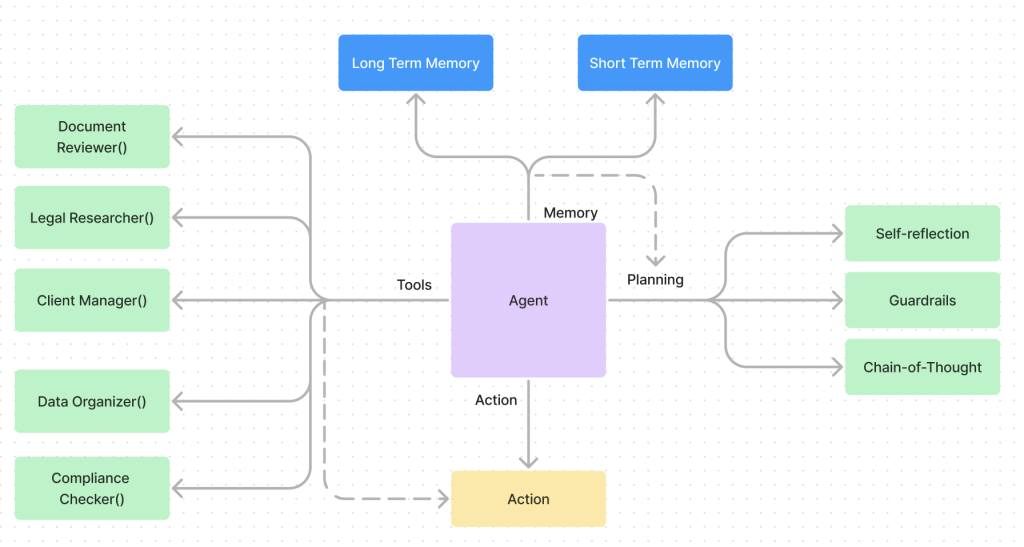
What Are AI Agents in Legal?
AI agents refer to software systems designed to perform tasks that typically require human intelligence. In the legal industry, these agents are increasingly being integrated into various stages of contract management. By utilizing machine learning algorithms and natural language processing (NLP), AI agents can assist with drafting, reviewing, analyzing, and even negotiating contracts. They are trained to identify potential risks, flag inconsistencies, and suggest improvements based on past data and legal precedents.
The advent of AI agents in legal services is not just a futuristic vision but a present reality. These intelligent systems are enabling legal teams to work faster, with more accuracy, and focus on more strategic elements of their work. Let’s take a closer look at how AI agents are reshaping the contract landscape.
How AI Agents Transform Contract Drafting
Contract drafting is a meticulous task that requires a deep understanding of legal principles and precision in language. Traditionally, this process has been manual, time-consuming, and vulnerable to human error. The introduction of AI agents in legal drafting is transforming this process significantly.
- Speed and Efficiency: AI agents can generate contract templates and clauses within minutes, a task that would otherwise take hours or even days. These systems are capable of pulling from vast databases of previously drafted contracts, allowing them to quickly produce accurate and legally sound documents.
- Error Reduction: Human error is a common issue in manual drafting, but AI agents minimize this risk. They can automatically detect inconsistencies or conflicting terms in contracts, ensuring that the final document is error-free.
- Customization: AI agents can adapt contract templates to specific client needs. They analyze past agreements and recommend the most relevant clauses, streamlining the customization process.
By automating these functions, AI agents allow legal professionals to focus more on providing strategic advice and less on administrative tasks.
Contract Review and Analysis with AI Agents
The review phase of contract management can be painstakingly detailed. Lawyers need to thoroughly check contracts for risks, ambiguities, and compliance with relevant laws and regulations. AI agents in legal services can significantly expedite this process.
- Risk Identification: AI agents can scan contracts for problematic terms, such as unclear liability clauses or overly broad indemnification provisions. They are trained to spot potential risks that could lead to legal disputes or financial losses.
- Compliance Checks: Ensuring a contract complies with all applicable laws is crucial. AI agents can automatically compare contract terms against legal databases and regulatory requirements, flagging any areas of concern.
- Contract Summarization: Instead of manually reading through lengthy contracts, legal professionals can use AI agents to generate summaries. This function is particularly useful when reviewing multiple contracts, saving time and effort.
In addition to speed and accuracy, AI agents in legal contract review offer a level of thoroughness that surpasses what most human reviewers can achieve. This is particularly beneficial in large-scale contract negotiations or mergers and acquisitions where hundreds of documents may need review within a short timeframe.
AI Agents in Contract Negotiation
Negotiating contract terms is often a complex process requiring a balance between the interests of all parties involved. AI agents in legal negotiation can assist in several ways:
- Data-Driven Insights: AI agents analyze historical contract data to provide insights into what terms are typically negotiated and how they were resolved. This helps legal professionals make informed decisions during negotiations.
- Scenario Forecasting: AI agents can simulate different negotiation scenarios, predicting potential outcomes based on various changes in contract terms. This predictive capability allows lawyers to strategize more effectively.
- Collaboration: AI agents can facilitate collaboration between parties by identifying mutually beneficial terms and suggesting compromises. This helps speed up negotiations and ensures that all parties reach an agreement more efficiently.
AI agents do not replace human judgment but instead enhance the negotiation process by providing valuable data and insights, making it easier to reach favorable outcomes.
The Role of AI Agents in Contract Lifecycle Management
Contract lifecycle management (CLM) encompasses the entire process from contract creation to execution, compliance, and renewal. AI agents in legal CLM streamline this process, ensuring that contracts are managed effectively and efficiently.
- Automated Alerts: AI agents can monitor contract deadlines and automatically send alerts for renewals or terminations. This reduces the risk of missing important dates that could have legal or financial implications.
- Performance Monitoring: AI agents can track contract performance by monitoring compliance with agreed-upon terms. They can alert legal teams to any breaches or issues that need attention, ensuring that all parties adhere to the contract.
- Data Analytics: AI agents analyze contract data to identify trends, risks, and opportunities. This information can be used to improve future contracts and strategies.
By managing the entire lifecycle of a contract, AI agents allow legal professionals to ensure ongoing compliance and performance without the need for constant manual oversight.
Conclusion
The integration of AI agents in legal services, particularly in contract management, represents a significant leap forward for the industry. From drafting and reviewing to negotiating and managing the entire lifecycle of contracts, AI agents are transforming how legal professionals work. These intelligent systems not only enhance efficiency and accuracy but also enable legal teams to focus on higher-value tasks, such as strategy and client service.
As AI agents continue to evolve, their role in legal contracts will undoubtedly expand, offering even more sophisticated tools for managing complex legal agreements. The future of contracts in the legal world is bright, and AI agents are at the forefront of this transformation.
 Tech Consultancy Blogs
Leave a comment