Introduction
In recent years, the financial reporting landscape has witnessed significant changes driven by technological advancements. One of the most notable innovations is generative AI in financial reporting. This cutting-edge technology is reshaping how organizations approach data analysis, reporting, and decision-making, offering unprecedented efficiency and accuracy.
Understanding Generative AI in Financial Reporting
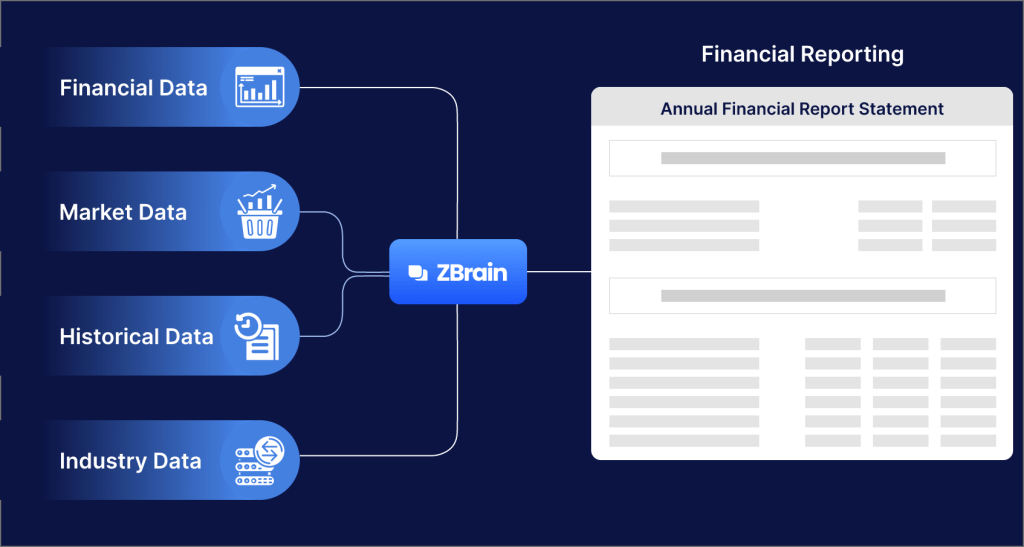
Generative AI refers to algorithms capable of creating content, making predictions, and generating insights from data. In financial reporting, this technology leverages large datasets to produce valuable outputs such as financial statements, analysis, and forecasts. By automating the report generation process, organizations can reduce manual effort, minimize errors, and enhance the overall quality of financial information.
The Importance of Data Accuracy
Accurate financial reporting is crucial for businesses and stakeholders. Errors in financial documents can lead to significant repercussions, including legal issues and reputational damage. Generative AI in financial reporting helps mitigate these risks by improving data accuracy. It analyzes vast amounts of historical and real-time data, identifying patterns and anomalies that might be overlooked by human analysts. This capability ensures that reports reflect the true financial health of an organization.
Streamlining the Reporting Process
One of the most compelling benefits of generative AI in financial reporting is its ability to streamline the reporting process. Traditionally, creating financial reports is a time-consuming task that requires input from various departments. However, with generative AI, organizations can automate data collection, analysis, and report generation.
The use of natural language processing (NLP) within generative AI allows for the creation of textual content that accompanies financial figures, making reports more comprehensive and easier to understand. As a result, finance teams can focus on strategic decision-making rather than spending excessive time on routine reporting tasks.
Enhancing Predictive Analytics
Generative AI in financial reporting also enhances predictive analytics. By analyzing historical data and identifying trends, this technology can provide insights into future financial performance. For instance, organizations can use generative AI to forecast revenues, expenses, and cash flow, allowing them to make informed decisions about budgeting and investment.
Moreover, the integration of generative AI with machine learning algorithms enables businesses to refine their predictive models continuously. As new data becomes available, these models adapt, ensuring that forecasts remain accurate and relevant. This capability is particularly valuable in today’s fast-paced business environment, where conditions can change rapidly.
Improving Compliance and Risk Management
Compliance with financial regulations is a top priority for organizations worldwide. Generative AI in financial reporting can significantly aid in maintaining compliance by automating data validation and ensuring adherence to regulatory requirements. This technology can monitor transactions and flag any discrepancies or potential compliance issues in real time.
Additionally, generative AI can enhance risk management practices. By analyzing data related to market trends, economic indicators, and internal performance metrics, organizations can identify potential risks and develop strategies to mitigate them. This proactive approach to risk management is essential in a dynamic financial landscape.
Transforming Financial Analysis
The implementation of generative AI in financial reporting not only improves efficiency but also transforms the way financial analysis is conducted. Traditionally, financial analysts would spend significant time gathering and organizing data before conducting their analyses. With generative AI, much of this groundwork is automated, allowing analysts to focus on interpreting results and making strategic recommendations.
Furthermore, generative AI can provide deeper insights by uncovering hidden patterns in data. This capability empowers financial analysts to make more informed decisions based on comprehensive analyses rather than relying solely on intuition or limited data sets.
Enhancing User Experience
The application of generative AI in financial reporting also enhances the user experience for both finance professionals and stakeholders. Interactive dashboards and visualizations generated by AI can present financial data in a more engaging and understandable format. Stakeholders can access real-time information and insights, facilitating better communication and collaboration across departments.
The user-friendly nature of these tools encourages more people within an organization to engage with financial data. As a result, the finance function becomes more integrated with overall business operations, driving a culture of data-driven decision-making.
The Future of Financial Reporting
As generative AI continues to evolve, its impact on financial reporting is expected to grow. Organizations that embrace this technology will likely gain a competitive edge by improving their reporting processes, enhancing data accuracy, and enabling better decision-making.
However, the implementation of generative AI in financial reporting is not without challenges. Organizations must invest in technology infrastructure, data management practices, and employee training to fully realize the potential of this technology. Furthermore, ethical considerations regarding data privacy and bias must be addressed to ensure responsible use of AI in financial reporting.
Conclusion
In summary, generative AI in financial reporting represents a transformative force that is reshaping the landscape of financial analysis and reporting. By improving data accuracy, streamlining processes, enhancing predictive analytics, and supporting compliance, generative AI empowers organizations to make informed decisions and respond to dynamic market conditions effectively.
 Tech Consultancy Blogs
Leave a comment