Introduction
Generative AI in legal contexts is revolutionizing the way legal professionals approach their work. As technology continues to evolve, law firms and legal departments are increasingly adopting AI tools to streamline processes, enhance productivity, and improve client outcomes. This article explores the role of generative AI in legal settings, its benefits, challenges, and future prospects.
Understanding Generative AI in Legal
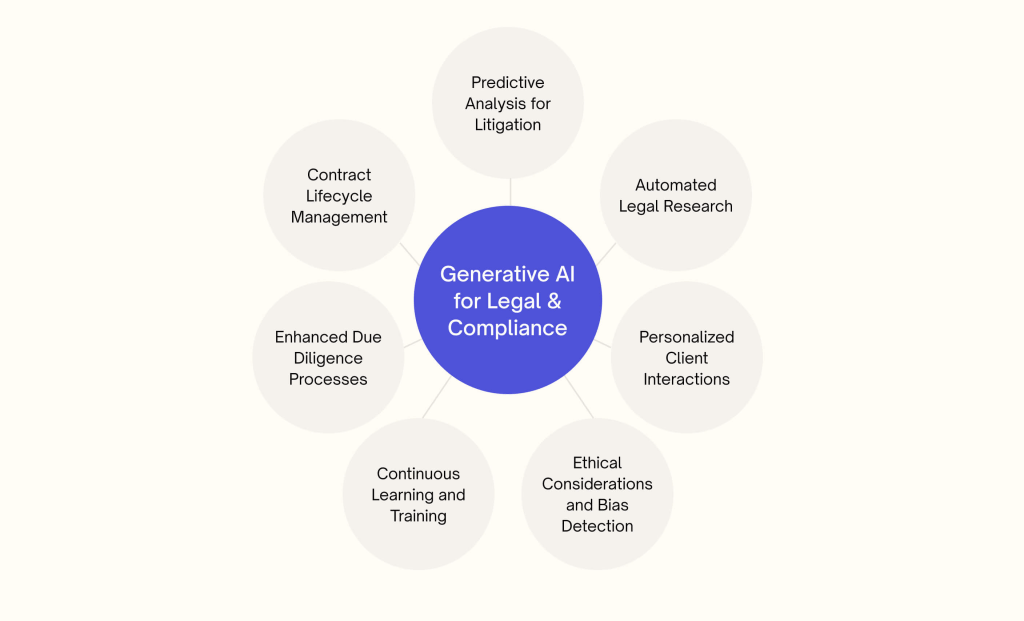
Generative AI refers to a subset of artificial intelligence that can create new content, including text, images, and data. In the legal field, generative AI can assist in drafting documents, conducting legal research, and even predicting case outcomes. By leveraging vast amounts of data and advanced algorithms, generative AI tools can analyze legal precedents and generate relevant documents efficiently.
Benefits of Generative AI in Legal
Increased Efficiency
One of the primary advantages of generative AI in legal practice is its ability to significantly increase efficiency. Legal professionals often spend countless hours drafting documents, researching case law, and reviewing contracts. Generative AI can automate these tasks, allowing lawyers to focus on more strategic activities. For example, AI tools can draft standard contracts or legal briefs, reducing the time required for preparation and enabling faster turnaround times for clients.
Improved Accuracy
Human error is an inevitable part of any profession, including law. However, the integration of generative AI in legal processes helps minimize these errors. AI systems can review vast amounts of legal data quickly and accurately, ensuring that important details are not overlooked. This accuracy is crucial in legal matters, where even minor mistakes can lead to significant consequences.
Enhanced Research Capabilities
Legal research is often a time-consuming and labor-intensive task. Generative AI in legal applications can streamline this process by analyzing case law, statutes, and legal opinions more effectively than traditional methods. AI-powered research tools can quickly identify relevant precedents, summarize findings, and even suggest arguments based on historical data. This allows lawyers to build stronger cases and provide clients with informed advice.
Predictive Analytics
Another exciting application of generative AI in legal contexts is predictive analytics. By analyzing past cases, AI algorithms can identify trends and patterns that may indicate the likely outcome of current cases. This insight allows lawyers to make better strategic decisions, assess risks, and advise clients on potential legal challenges. For example, generative AI can analyze factors such as jurisdiction, judge history, and case type to provide a more accurate prediction of case outcomes.
Challenges of Implementing Generative AI in Legal
Data Privacy and Security
Despite the many benefits of generative AI in legal, there are also significant challenges that must be addressed. One of the most pressing concerns is data privacy and security. Legal professionals handle sensitive client information, and any breach could have serious consequences. It is essential for law firms to ensure that AI tools comply with data protection regulations and maintain strict security protocols to protect confidential information.
Ethical Considerations
The use of generative AI in legal also raises ethical questions. For instance, there is concern about the potential for bias in AI algorithms, which could lead to unfair outcomes in legal proceedings. It is crucial for legal professionals to remain vigilant and ensure that AI tools are used ethically and transparently. Additionally, lawyers must maintain their role as advocates for their clients, even when utilizing AI tools to assist in their work.
Training and Adoption
Implementing generative AI in legal settings requires training and a cultural shift within organizations. Lawyers and staff must be educated on how to use these tools effectively and understand their limitations. Additionally, some legal professionals may be resistant to adopting new technologies, fearing that AI could replace their roles. It is vital for law firms to foster an environment where technology is viewed as a complement to legal expertise rather than a replacement.
The Future of Generative AI in Legal
As the legal industry continues to evolve, the role of generative AI is likely to expand further. Ongoing advancements in AI technology will lead to even more sophisticated tools that can assist lawyers in various aspects of their work. For example, we may see the emergence of AI systems capable of providing real-time legal advice, analyzing complex legal documents, and automating entire workflows.
Moreover, the integration of generative AI in legal practice may lead to greater access to justice. By reducing costs and increasing efficiency, AI-powered legal services can make legal assistance more affordable for individuals and small businesses. This democratization of legal services could help bridge the gap between those who can afford legal representation and those who cannot.
Conclusion
Generative AI in legal is transforming the legal landscape, offering numerous benefits that enhance efficiency, accuracy, and research capabilities. However, the challenges of data privacy, ethical considerations, and adoption must be addressed for successful implementation. As technology continues to advance, the future of generative AI in legal holds great promise for improving legal practices and expanding access to justice. Legal professionals who embrace these innovations will be better equipped to navigate the complexities of the modern legal environment, ultimately benefiting their clients and the legal system as a whole.
 Tech Consultancy Blogs
Leave a comment