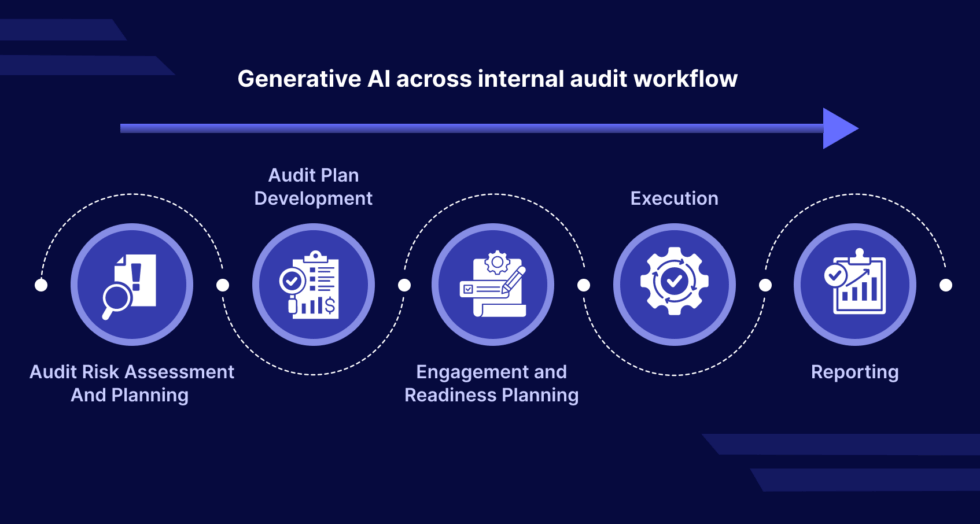
The world of internal audit is rapidly evolving, and one of the most significant advancements is the rise of Generative AI. As businesses seek greater efficiency, accuracy, and innovation in their auditing processes, the introduction of Generative AI for internal audit promises to transform the landscape. This article explores how Generative AI can be applied in internal audit, its benefits, challenges, and the future potential of this technology.
What is Generative AI?
Generative AI is a form of artificial intelligence that uses algorithms to generate new content, ideas, or solutions by analyzing vast amounts of data. Unlike traditional AI, which typically operates within predefined parameters, Generative AI learns from data patterns and can produce novel outputs, making it particularly useful for complex problem-solving scenarios. In the context of internal auditing, it helps to not only identify risks but also propose insights and recommendations that may otherwise go unnoticed.
The Role of Generative AI in Internal Audit
The primary function of internal audit is to provide independent and objective assessments of a company’s internal controls, risk management, and governance processes. Generative AI for internal audit introduces a new layer of intelligence, automation, and foresight to these processes. This technology can assist auditors in several key areas:
1. Enhanced Risk Identification
Generative AI has the ability to analyze massive datasets in a fraction of the time it would take a human auditor. It can detect anomalies, patterns, and trends that may indicate potential risks. For example, by analyzing financial transactions, Generative AI for internal audit can identify irregularities that suggest fraud or compliance violations. This level of analysis improves the auditor’s ability to identify risks early and with greater precision.
2. Automated Report Generation
One of the most time-consuming tasks in internal audit is the preparation of reports. Generative AI can streamline this process by drafting detailed reports based on the data it analyzes. This includes summarizing findings, generating charts, and suggesting actionable insights. Automating this aspect allows internal auditors to focus more on strategic areas such as risk assessment and advising stakeholders, rather than getting bogged down by administrative tasks.
3. Continuous Auditing and Monitoring
Traditionally, internal audits are performed periodically, often annually or quarterly. Generative AI for internal audit changes this by enabling continuous monitoring of financial transactions, compliance activities, and operational processes. This real-time oversight helps companies remain proactive in managing risks and responding to potential issues as they arise, rather than after the fact. It also improves the overall accuracy and timeliness of audit results.
4. Reducing Human Bias
Human auditors, though skilled, are subject to biases and can sometimes overlook certain risks due to preconceived notions or time constraints. Generative AI for internal audit operates purely based on data, reducing the likelihood of such biases. By providing an objective, data-driven analysis, this technology ensures a more balanced and thorough audit process.
Benefits of Generative AI in Internal Audit
The integration of Generative AI in internal audit processes offers several distinct advantages:
1. Improved Efficiency
Generative AI can automate many aspects of the audit process, from data analysis to report generation, significantly reducing the time auditors spend on routine tasks. This allows audit teams to focus more on strategic decision-making, adding value to the business.
2. Greater Accuracy
By analyzing massive datasets without fatigue, Generative AI ensures a higher level of accuracy in identifying risks, anomalies, and compliance issues. This leads to more reliable audit results and reduces the risk of errors in reporting.
3. Scalability
Internal audit teams are often limited by manpower and resources, especially in large organizations with complex processes. Generative AI for internal audit enables auditors to scale their efforts, handling larger volumes of data and more complex scenarios with ease.
4. Enhanced Insights
The ability of Generative AI to identify patterns and trends across datasets allows it to offer deeper insights that human auditors may miss. These insights can help organizations anticipate future risks, trends, and areas for improvement, ultimately supporting better business decisions.
Challenges of Implementing Generative AI for Internal Audit
While the benefits are substantial, there are also challenges that organizations may face when integrating Generative AI into internal audit processes:
1. Data Privacy and Security
Generative AI requires access to large amounts of sensitive data to function effectively. Ensuring that this data remains secure and compliant with data privacy regulations is a critical concern. Organizations need to invest in robust cybersecurity measures to safeguard this data.
2. Skill Gap
Implementing Generative AI for internal audit requires a shift in skill sets for audit teams. Auditors will need to develop an understanding of AI technology and data analysis techniques. Continuous training and collaboration with data scientists or AI experts may be necessary to ensure that the full potential of Generative AI is realized.
3. Ethical Considerations
As with any AI technology, there are ethical concerns surrounding its use. Decisions made based on AI-generated insights need to be transparent, and the algorithms should be designed in a way that avoids unintended biases. Audit teams must establish clear guidelines on how to use AI-generated information responsibly.
4. Initial Investment
The cost of implementing Generative AI for internal audit can be significant, especially for smaller companies. Beyond the financial investment, organizations also need to invest time and resources in integrating AI into their existing audit frameworks.
The Future of Generative AI in Internal Audit
The future of Generative AI for internal audit looks promising. As the technology continues to evolve, we can expect even more sophisticated AI tools that provide auditors with better, faster, and more accurate insights. Future AI systems may not only assist in risk identification and report generation but also play a more proactive role in recommending strategies to mitigate risks.
Furthermore, as internal auditors become more adept at using AI, the focus of internal audit is likely to shift from transactional tasks to more strategic activities. Auditors will increasingly act as advisors to businesses, helping them navigate the complex risk landscapes with the help of AI-powered insights.
Conclusion
Generative AI for internal audit represents a transformative opportunity for organizations seeking to improve their audit processes. By automating routine tasks, enhancing risk identification, and providing deeper insights, this technology offers unprecedented efficiency and accuracy. However, organizations must carefully navigate the challenges of data privacy, ethical use, and skill development to fully realize the benefits of this innovation. The future of internal audit, powered by Generative AI, promises to be one where businesses are better equipped to manage risks and achieve their objectives.
 Tech Consultancy Blogs
Leave a comment