Artificial Intelligence (AI) has become a transformative force across various industries, with one of its most significant impacts being in information technology (IT). As businesses and organizations strive for innovation and efficiency, AI in information technology is at the forefront of revolutionizing the way systems operate, data is processed, and decisions are made. This article explores the profound influence of AI in IT, highlighting its key applications, benefits, and the future potential it holds.
1. AI in Information Technology: An Overview
Artificial Intelligence refers to the development of computer systems capable of performing tasks that typically require human intelligence, such as decision-making, speech recognition, problem-solving, and learning from experience. In the context of information technology, AI is used to enhance and automate processes, improve system efficiency, and foster innovation.
The integration of AI in information technology has led to the development of smarter systems that can process vast amounts of data, recognize patterns, and make predictions. This capability allows IT professionals to streamline workflows, automate routine tasks, and focus on more strategic initiatives. AI’s ability to learn and adapt over time is a key factor driving its widespread adoption in the IT sector.
2. Key Applications of AI in Information Technology
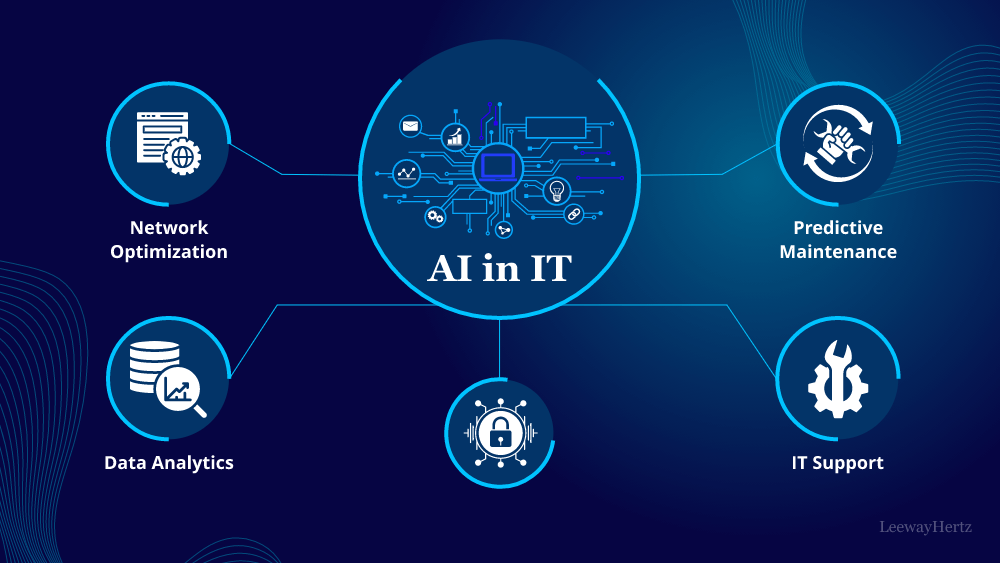
The role of AI in information technology is growing rapidly, with several core applications that are transforming the way businesses operate:
a. Automation of Routine Tasks
One of the primary applications of AI in information technology is automating repetitive tasks. These tasks, which were once time-consuming and prone to human error, can now be efficiently handled by AI systems. For example, AI-driven automation can be used to manage data entry, monitor system performance, and handle IT support requests. Automation not only saves time but also reduces the chances of errors, improving the overall efficiency of IT operations.
b. Enhanced Cybersecurity
With the increasing sophistication of cyber threats, AI in information technology plays a crucial role in enhancing cybersecurity measures. AI systems can analyze network traffic, detect unusual patterns, and identify potential threats in real time. Machine learning algorithms are used to understand the behavior of malicious software and predict future attacks. This proactive approach allows IT teams to respond to security risks more effectively and reduce the likelihood of data breaches.
c. Data Management and Analytics
The volume of data generated by organizations today is enormous, and managing this data effectively is a major challenge. AI in information technology has made it possible to process and analyze large datasets with greater speed and accuracy. AI-powered tools can extract meaningful insights from raw data, helping organizations make data-driven decisions. Moreover, AI enables predictive analytics, allowing businesses to forecast trends, optimize operations, and improve customer experiences.
d. IT Support and Service Management
AI has revolutionized IT support services by introducing chatbots and virtual assistants that can handle basic queries and troubleshoot common issues. These AI-driven tools are available 24/7, providing users with instant support and reducing the workload on human IT teams. Additionally, AI in information technology is being used to enhance service management by predicting system failures and suggesting preventive maintenance measures.
3. Benefits of AI in Information Technology
The integration of AI in information technology offers numerous advantages that contribute to the efficiency and effectiveness of IT systems:
a. Increased Efficiency and Productivity
AI’s ability to automate routine tasks and analyze data quickly leads to increased efficiency in IT operations. Tasks that would take hours or days to complete manually can now be done in minutes, freeing up IT professionals to focus on more strategic initiatives. This boost in productivity is one of the primary reasons why businesses are increasingly turning to AI in information technology.
b. Cost Reduction
By automating tasks and improving the accuracy of decision-making processes, AI in information technology helps organizations reduce operational costs. For instance, AI can predict potential system failures before they occur, minimizing downtime and the associated costs of repairs. Additionally, AI-driven tools can reduce the need for large IT support teams, leading to further cost savings.
c. Enhanced Decision Making
AI systems are capable of processing large amounts of data and providing insights that help organizations make better-informed decisions. In the field of IT, AI can analyze network performance, identify inefficiencies, and suggest improvements. Furthermore, AI’s predictive capabilities enable businesses to anticipate market trends and adapt to changes more quickly.
d. Improved Security
With AI in information technology, businesses can implement more advanced cybersecurity measures that detect and mitigate threats in real time. AI’s ability to learn from data means it can adapt to new forms of attacks, providing organizations with an additional layer of protection against cybercriminals. This leads to a more secure IT environment and reduced risks of data breaches.
4. Challenges and Considerations
While AI in information technology brings numerous benefits, it also presents some challenges. One of the primary concerns is the potential loss of jobs due to automation. As AI systems take over routine tasks, there is a fear that certain IT roles may become obsolete. However, many experts believe that AI will create new opportunities for IT professionals, who will need to focus on more complex and strategic work.
Another challenge is the ethical and privacy concerns associated with AI. The use of AI to collect and analyze vast amounts of data raises questions about data privacy and security. Organizations must ensure they have the appropriate safeguards in place to protect sensitive information and comply with data protection regulations.
5. The Future of AI in Information Technology
The future of AI in information technology is promising, with advancements in machine learning, natural language processing, and robotics paving the way for even more innovative applications. As AI continues to evolve, we can expect to see smarter, more intuitive IT systems that can adapt to changing business needs in real time.
In the coming years, AI is likely to play an even greater role in areas such as network management, cloud computing, and software development. Additionally, as AI becomes more integrated into IT systems, there will be a growing demand for skilled professionals who can manage and implement AI-driven solutions.
Conclusion
AI in information technology has revolutionized the way organizations operate, offering enhanced efficiency, improved security, and smarter decision-making capabilities. From automating routine tasks to enhancing cybersecurity, AI is reshaping the IT landscape. As the technology continues to evolve, businesses must embrace AI to stay competitive in the digital era. By leveraging AI’s full potential, IT professionals can drive innovation, reduce costs, and position their organizations for long-term success.
 Tech Consultancy Blogs
Leave a comment