Introduction
Artificial intelligence (AI) is revolutionizing various industries, and logistics and supply chain management are no exceptions. With the ability to analyze vast amounts of data and make intelligent decisions, AI in logistics and supply chain is streamlining processes, enhancing efficiency, and improving customer satisfaction. This article explores the various use cases, applications, solutions, and implementation strategies of AI in this critical sector.
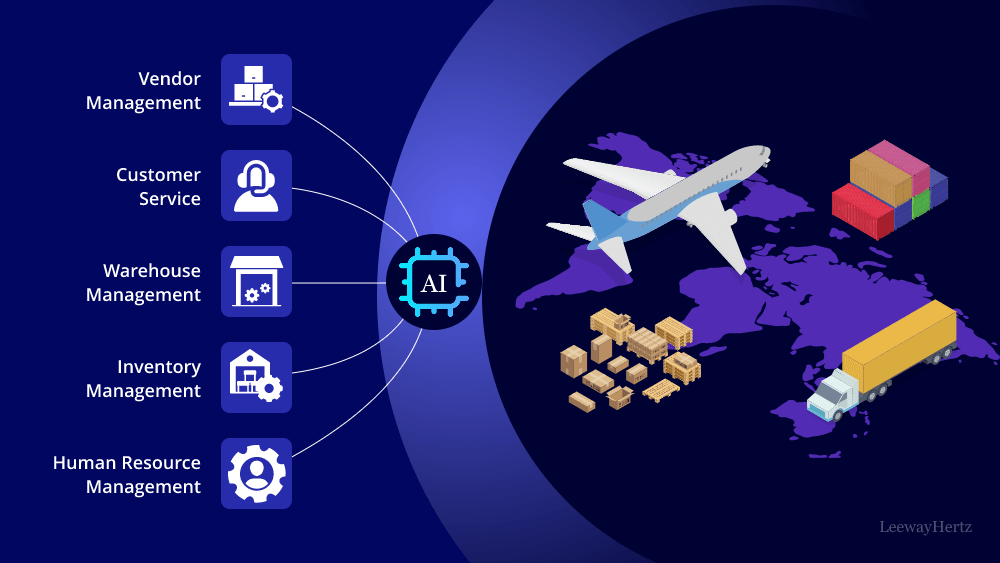
Use Cases of AI in Logistics and Supply Chain
AI technologies are being adopted in logistics and supply chain management to address a multitude of challenges. One significant use case is demand forecasting. Traditional methods often rely on historical data and can fall short due to unforeseen market changes. However, AI algorithms can analyze diverse datasets, including market trends, seasonality, and consumer behavior, to produce accurate forecasts. This results in optimized inventory levels and reduced holding costs.
Another notable use case is route optimization. AI can process real-time data from GPS, traffic patterns, and weather conditions to identify the most efficient delivery routes. This not only reduces fuel costs but also ensures timely deliveries, thereby enhancing customer satisfaction.
Additionally, AI is instrumental in warehouse management. Automated systems powered by AI can facilitate the organization and retrieval of goods, significantly reducing the time taken to fulfill orders. This enhances operational efficiency and allows companies to meet customer demands more effectively.
Applications of AI in Logistics and Supply Chain
The applications of AI in logistics and supply chain are vast and varied. One prominent application is in predictive maintenance. AI can analyze data from equipment sensors to predict failures before they occur. By scheduling maintenance proactively, companies can minimize downtime and prolong the lifespan of their assets.
Furthermore, AI in logistics and supply chain plays a crucial role in enhancing supply chain visibility. By utilizing AI-driven analytics, companies can gain real-time insights into their supply chain processes. This visibility enables organizations to identify bottlenecks, monitor supplier performance, and enhance overall operational efficiency.
AI chatbots are another application that enhances customer interaction. These AI-driven systems can handle inquiries, provide updates, and resolve issues, allowing customer service representatives to focus on more complex tasks. This not only improves response times but also enhances the overall customer experience.
Solutions Powered by AI in Logistics and Supply Chain
Several AI-powered solutions are shaping the future of logistics and supply chain management. Machine learning algorithms are at the forefront, enabling organizations to analyze historical data and improve decision-making processes. These algorithms help in identifying patterns and anomalies that may not be evident through traditional analysis methods.
Robotic process automation (RPA) is another significant solution that utilizes AI to automate repetitive tasks. In logistics, RPA can streamline processes such as order processing, invoicing, and inventory management, thereby reducing the likelihood of human error and increasing efficiency.
Moreover, computer vision technology is gaining traction in warehouse operations. AI systems equipped with computer vision can monitor inventory levels, detect damaged goods, and facilitate quality control, ensuring that only the best products reach consumers. This application reduces waste and enhances the quality of service provided.
Implementation of AI in Logistics and Supply Chain
Implementing AI in logistics and supply chain requires a strategic approach. First and foremost, organizations must assess their current processes and identify areas where AI can add value. This could involve analyzing inefficiencies, high operational costs, or customer service challenges.
Next, organizations should invest in data collection and management. AI systems rely heavily on data to function effectively. Companies must ensure that they have robust data management practices in place to collect, store, and analyze relevant information. This may involve integrating various data sources, such as inventory systems, customer databases, and supplier information.
Training and upskilling employees is also critical for successful implementation. Employees must understand how to leverage AI tools and technologies to maximize their benefits. Providing training programs and resources will empower staff to adapt to new systems and processes.
Finally, organizations should adopt a phased approach to implementation. Starting with pilot projects allows companies to test AI solutions on a smaller scale before scaling them across the organization. This approach minimizes risks and enables businesses to refine their strategies based on initial outcomes.
Conclusion
AI in logistics and supply chain is proving to be a game-changer, offering numerous benefits that enhance operational efficiency and customer satisfaction. By embracing AI technologies, organizations can optimize their processes, predict demand more accurately, and improve their overall supply chain visibility. As AI continues to evolve, its applications in logistics and supply chain management will undoubtedly expand, paving the way for even greater advancements in the industry. Embracing this technology is not just a trend; it is a crucial step toward staying competitive in a rapidly changing marketplace.
 Tech Consultancy Blogs
Leave a comment