Introduction to Anomaly Detection
Anomaly detection is a critical process used to identify unusual patterns that do not conform to expected behavior within data. This process is essential in various fields such as finance, healthcare, cybersecurity, and manufacturing, where detecting anomalies can lead to significant cost savings and improved safety. As data generation continues to increase, traditional methods of anomaly detection are becoming less effective. This is where the role of AI in anomaly detection becomes increasingly vital.
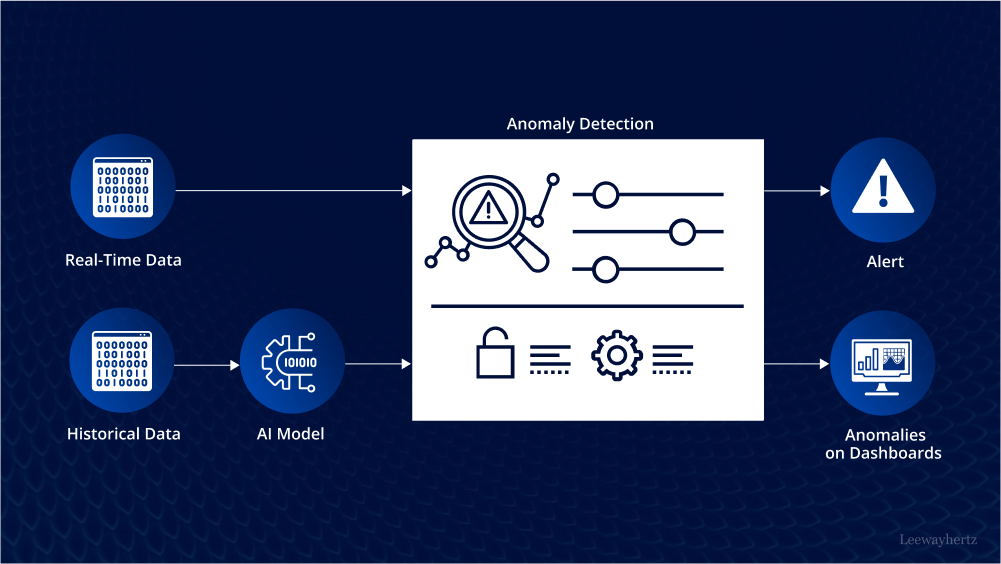
Understanding AI and Its Importance
Artificial Intelligence (AI) refers to the simulation of human intelligence processes by machines, especially computer systems. AI encompasses various technologies, including machine learning, deep learning, and neural networks. These technologies enable machines to learn from data, recognize patterns, and make predictions. The integration of AI in anomaly detection enhances the ability to process large volumes of data quickly and efficiently, leading to more accurate detection of anomalies.
How AI Enhances Anomaly Detection
Improved Accuracy
One of the significant advantages of employing AI in anomaly detection is the improvement in accuracy. Traditional methods often rely on predefined thresholds and statistical techniques, which can lead to false positives or negatives. AI algorithms, particularly those based on machine learning, can adaptively learn from historical data. They can identify complex patterns and relationships that may not be apparent to human analysts or traditional statistical methods. This adaptability allows for a more nuanced understanding of what constitutes normal behavior, thereby improving the detection of anomalies.
Scalability
As organizations accumulate vast amounts of data, scalability becomes a crucial factor in data analysis. AI systems can easily scale to accommodate growing datasets, enabling continuous monitoring and analysis without significant increases in resource requirements. This scalability allows organizations to implement real-time anomaly detection systems that can operate across various platforms and devices, ensuring that anomalies are detected promptly.
Real-Time Analysis
AI in anomaly detection allows for real-time analysis of data streams. Traditional methods often involve batch processing, which can delay the detection of anomalies until after the data has been analyzed. With AI, organizations can monitor data in real time, enabling them to respond swiftly to potential threats or irregularities. This capability is particularly important in sectors such as cybersecurity, where timely detection can prevent data breaches and other security incidents.
Applications of AI in Anomaly Detection
Cybersecurity
In the realm of cybersecurity, the role of AI in anomaly detection is paramount. Cyber threats are becoming increasingly sophisticated, and traditional security measures may not be sufficient to protect sensitive data. AI algorithms can analyze network traffic patterns to identify unusual behavior that may indicate a security breach. By continuously learning from new data, AI systems can adapt to evolving threats and provide more robust security measures.
Healthcare
In healthcare, AI in anomaly detection plays a vital role in patient monitoring and diagnosis. By analyzing patient data, including vital signs and lab results, AI can detect anomalies that may signify medical emergencies or deteriorating health conditions. Early detection through AI can lead to timely interventions, ultimately improving patient outcomes and reducing healthcare costs.
Manufacturing
In manufacturing, the application of AI in anomaly detection helps ensure product quality and operational efficiency. By monitoring equipment performance and production processes, AI systems can identify irregularities that may indicate potential failures or defects. This proactive approach to quality control can significantly reduce downtime and maintenance costs.
Challenges in Implementing AI for Anomaly Detection
Despite the numerous benefits, the integration of AI in anomaly detection is not without challenges. One of the primary obstacles is the quality of the data used for training AI models. Inaccurate or incomplete data can lead to poor model performance and unreliable anomaly detection. Organizations must invest in data cleansing and preparation to ensure the effectiveness of AI systems.
Another challenge is the interpretability of AI models. Many AI algorithms, particularly deep learning models, operate as black boxes, making it difficult for users to understand how decisions are made. This lack of transparency can lead to distrust in the system and hinder its adoption. Developing methods for interpreting AI models is essential for building confidence among users and stakeholders.
The Future of AI in Anomaly Detection
The future of AI in anomaly detection is promising. As technology continues to advance, AI systems will become more sophisticated, enabling even more accurate and efficient detection of anomalies. The integration of AI with other technologies, such as the Internet of Things (IoT), will further enhance the ability to monitor and analyze data in real time. Organizations will increasingly rely on AI to protect their assets, streamline operations, and make data-driven decisions.
Conclusion
AI is revolutionizing the field of anomaly detection, offering improved accuracy, scalability, and real-time analysis. By harnessing the power of AI, organizations can proactively identify and respond to anomalies across various sectors, from cybersecurity to healthcare and manufacturing. While challenges remain, the ongoing advancements in AI technology will continue to enhance its role in anomaly detection, ensuring that businesses can adapt to the complexities of modern data landscapes. Embracing AI in anomaly detection is not just a trend; it is a necessary step toward achieving better data insights and operational efficiency.
 Tech Consultancy Blogs
Leave a comment