In the modern financial world, artificial intelligence (AI) is rapidly transforming various processes, and one area where its impact is profoundly felt is in loan underwriting. This article explores how AI is revolutionizing the loan underwriting process, its benefits, challenges, and future prospects.
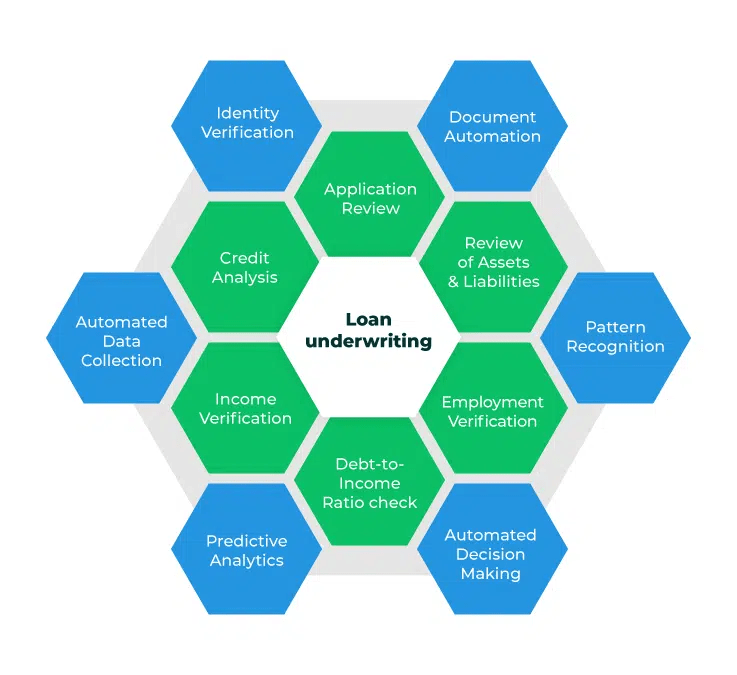
Understanding AI in Loan Underwriting
AI in loan underwriting refers to the application of artificial intelligence technologies to assess and process loan applications. Traditionally, loan underwriting involves evaluating creditworthiness based on financial history, credit scores, and other relevant factors. With AI, this process is enhanced through advanced algorithms and machine learning models that analyze large datasets more efficiently and accurately.
Benefits of AI in Loan Underwriting
- Increased Efficiency AI in loan underwriting significantly speeds up the loan approval process. Machine learning algorithms can process and analyze data much faster than human underwriters, reducing the time it takes to make a decision. This efficiency not only benefits lenders by streamlining operations but also improves the customer experience by providing quicker responses to loan applications.
- Enhanced Accuracy One of the key advantages of AI in loan underwriting is its ability to analyze vast amounts of data with a high degree of accuracy. AI models can identify patterns and correlations that may not be immediately apparent to human underwriters. This improved accuracy helps in making more informed decisions, reducing the risk of errors and biases in the underwriting process.
- Personalized Loan Offerings AI in loan underwriting allows for more personalized loan offerings. By analyzing a borrower’s financial behavior and history, AI systems can tailor loan terms and conditions to better suit individual needs. This personalized approach can lead to more favorable loan terms for borrowers and a better alignment of loan products with their financial situations.
- Risk Management Effective risk management is crucial in the lending industry. AI in loan underwriting enhances risk assessment by using predictive analytics to evaluate the likelihood of default. These predictive models can incorporate various factors, such as economic conditions and borrower behavior, to provide a more comprehensive risk profile. This helps lenders mitigate potential losses and make better-informed lending decisions.
Challenges of AI in Loan Underwriting
- Data Privacy and Security The use of AI in loan underwriting involves handling sensitive personal and financial data. Ensuring data privacy and security is a significant challenge. Lenders must implement robust cybersecurity measures to protect this information from unauthorized access and breaches. Compliance with data protection regulations is also essential to maintain trust and avoid legal issues.
- Bias and Fairness AI algorithms are only as good as the data they are trained on. If the data used to train these models contain biases, there is a risk that the AI in loan underwriting could perpetuate or even exacerbate these biases. Ensuring fairness in lending decisions requires continuous monitoring and refinement of AI models to identify and address any potential biases.
- Regulatory Compliance The financial industry is heavily regulated, and the use of AI in loan underwriting introduces new regulatory challenges. Lenders must navigate complex regulatory requirements to ensure that their AI systems comply with laws and standards governing lending practices. This may involve regular audits, transparency in decision-making processes, and adherence to ethical guidelines.
- Dependence on Quality Data The effectiveness of AI in loan underwriting is highly dependent on the quality of data available. Inaccurate or incomplete data can lead to incorrect conclusions and poor decision-making. Ensuring the accuracy and completeness of data used in AI models is crucial for maintaining the reliability of underwriting processes.
The Future of AI in Loan Underwriting
The future of AI in loan underwriting holds promising possibilities. As technology continues to advance, AI systems are expected to become even more sophisticated, further enhancing their ability to analyze data and make precise predictions. Integration with other emerging technologies, such as blockchain and advanced data analytics, could further revolutionize the underwriting process.
Moreover, ongoing developments in regulatory frameworks will likely address current challenges related to AI in loan underwriting, such as data privacy and bias. As the industry adapts to these changes, the role of AI in loan underwriting is expected to become more refined and integral to the lending process.
Conclusion
AI in loan underwriting represents a significant leap forward in the financial sector, offering numerous benefits such as increased efficiency, enhanced accuracy, and personalized loan offerings. While challenges like data privacy, bias, and regulatory compliance need to be addressed, the potential of AI to transform loan underwriting is undeniable. As technology continues to evolve, AI is set to play an increasingly important role in shaping the future of lending, making the process more effective and tailored to the needs of borrowers and lenders alike.
 Tech Consultancy Blogs
Leave a comment