Introduction
The rise of Generative AI for compliance has transformed how organizations approach regulatory requirements, offering efficient solutions to maintain compliance and reduce risks. As global regulations grow more complex, businesses need tools that not only streamline processes but also adapt to changing rules. Generative AI has emerged as a game-changer, providing compliance teams with advanced capabilities to manage compliance challenges in a fast-evolving environment.
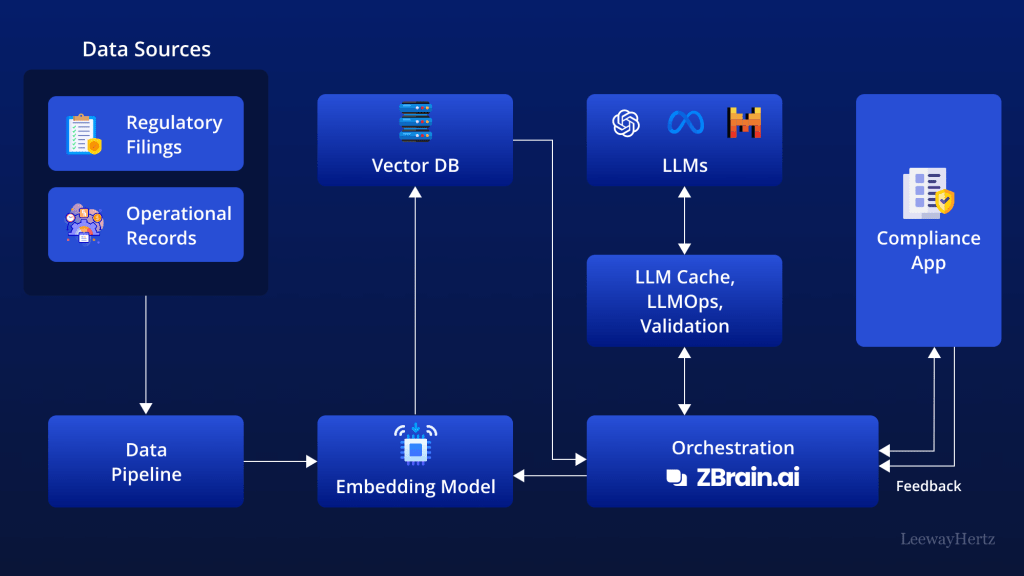
What is Generative AI and How It Works in Compliance?
Generative AI refers to artificial intelligence models that can generate new content, such as text, images, or data, by learning patterns from existing data. These models, powered by deep learning, have broad applications across industries, and compliance is one area seeing significant benefits. In the context of compliance, generative AI helps businesses automate regulatory reviews, analyze large datasets, and generate reports while reducing human error.
Compliance involves adhering to rules, regulations, and standards across various industries. Traditionally, this has been a labor-intensive process, requiring manual oversight to ensure that businesses operate within legal and ethical frameworks. Generative AI for compliance automates many of these tasks, allowing compliance teams to focus on higher-level strategic goals rather than mundane, repetitive activities.
Applications of Generative AI for Compliance
Generative AI has multiple applications in compliance, making it a valuable asset in the regulatory landscape. Here are some key areas where Generative AI for compliance plays a vital role:
1. Automated Documentation and Reporting
One of the most time-consuming aspects of compliance is the creation and management of documentation. Whether it’s financial reports, risk assessments, or audit reports, generating accurate and detailed documents is essential for meeting regulatory obligations. Generative AI for compliance can streamline this process by automatically creating documents, identifying discrepancies, and ensuring that all information aligns with the latest regulations.
By analyzing historical data, generative AI can also produce predictive reports that anticipate future risks, helping organizations stay ahead of potential compliance issues.
2. Regulatory Change Management
Regulations are constantly evolving, and staying updated with these changes is crucial for compliance teams. Generative AI for compliance can be used to monitor regulatory updates in real-time, automatically interpreting new rules and updating internal systems to reflect the latest standards. This reduces the risk of non-compliance due to outdated information and ensures that businesses remain compliant with evolving laws.
By leveraging AI, businesses can significantly reduce the time and resources needed to manage regulatory changes while maintaining accuracy and efficiency.
3. Risk Assessment and Mitigation
Another critical area where Generative AI for compliance proves invaluable is in risk assessment. Traditionally, this process involves reviewing vast amounts of data to identify potential risks. With generative AI, risk management becomes more proactive. AI algorithms can analyze trends, patterns, and anomalies in data to detect emerging risks, allowing organizations to address them before they become significant problems.
Generative AI can also simulate various scenarios to help compliance teams understand how different actions might impact their risk exposure, enabling more informed decision-making.
4. Fraud Detection and Prevention
Fraud detection is a vital component of compliance, especially in industries like finance, healthcare, and insurance. Generative AI models can help identify unusual patterns or behaviors in real-time, flagging potential fraudulent activities before they escalate. Unlike traditional methods, which rely heavily on predefined rules, Generative AI for compliance uses dynamic algorithms that can adapt to new and evolving fraud tactics, providing a more robust defense against financial crime.
By continuously learning from data, generative AI enhances fraud detection capabilities, offering businesses a way to stay ahead of emerging threats.
5. Enhanced Data Privacy and Security
With the increasing focus on data protection regulations like GDPR and CCPA, businesses need to ensure that their compliance strategies include robust data privacy measures. Generative AI for compliance plays a significant role in helping organizations manage personal data more securely. By anonymizing sensitive information and generating synthetic datasets, AI can help companies meet regulatory requirements without compromising data integrity.
Additionally, AI-driven tools can identify vulnerabilities in data management systems, offering recommendations to improve security and reduce the risk of breaches, which is essential for maintaining compliance in today’s data-driven world.
Benefits of Generative AI for Compliance
There are numerous advantages to integrating Generative AI for compliance within an organization. Here are some key benefits:
1. Efficiency and Cost-Effectiveness
One of the most significant benefits of adopting Generative AI for compliance is the potential for increased efficiency. By automating repetitive tasks such as data analysis, reporting, and regulatory updates, businesses can reduce the time spent on compliance activities, leading to cost savings. With fewer resources needed to manage these tasks, compliance teams can focus on more strategic, high-level initiatives.
2. Improved Accuracy
Manual processes are often prone to human error, especially when dealing with large amounts of data. Generative AI can minimize these risks by accurately processing and analyzing vast datasets, ensuring that all regulatory requirements are met with precision. This reduces the likelihood of non-compliance due to oversight or inaccuracies.
3. Adaptability to Regulatory Changes
As mentioned earlier, regulations are constantly changing, and keeping up with these updates can be a challenge. Generative AI for compliance provides businesses with the flexibility to adapt to new regulations quickly and efficiently. This adaptability helps companies avoid penalties or fines due to non-compliance while maintaining their competitive edge.
4. Scalability
As organizations grow, so do their compliance needs. Traditional compliance processes may struggle to keep pace with the demands of larger operations, but Generative AI for compliance offers a scalable solution. Whether dealing with increasing amounts of data or expanding into new markets with different regulatory frameworks, AI-driven compliance tools can easily scale to meet the demands of a growing organization.
The Future of Compliance with Generative AI
The adoption of Generative AI for compliance is expected to grow as organizations recognize the potential of these tools to transform their regulatory frameworks. In the future, AI-driven compliance solutions may become standard practice, enabling businesses to automate more complex tasks, improve decision-making, and create more robust compliance strategies.
As AI continues to evolve, it will likely play an even more critical role in regulatory compliance, offering new ways to enhance transparency, accountability, and efficiency in business operations.
Conclusion
In today’s regulatory landscape, compliance is more challenging than ever. However, with the help of Generative AI for compliance, organizations can navigate these complexities with greater ease and accuracy. By automating tasks, improving risk assessment, and staying ahead of regulatory changes, generative AI empowers businesses to meet compliance obligations more efficiently and effectively than ever before.
 Tech Consultancy Blogs
Leave a comment