Introduction
In recent years, the logistics industry has witnessed significant technological advancements that are reshaping how goods are transported and managed across the globe. Among these advancements, generative AI has emerged as a game-changer, offering unprecedented opportunities to streamline operations, enhance decision-making, and optimize supply chain management. This article explores the transformative role of generative AI in logistics, highlighting its key applications and benefits.
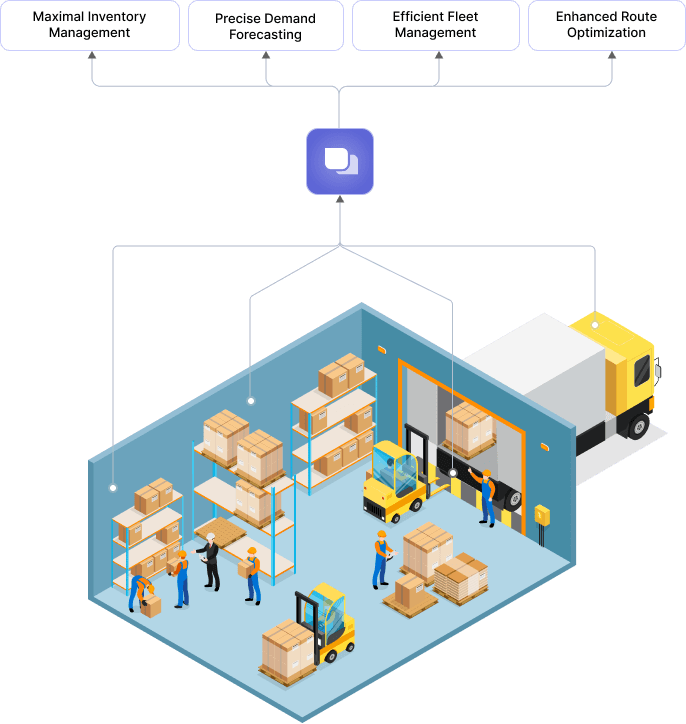
Understanding Generative AI in Logistics
Generative AI refers to a class of artificial intelligence algorithms that can create new data, models, or solutions by learning patterns from existing data. Unlike traditional AI, which primarily focuses on analyzing and predicting outcomes based on historical data, generative AI has the capability to generate entirely new solutions or scenarios. In logistics, this means that AI systems can not only optimize current processes but also invent new ways to solve complex challenges.
Enhancing Supply Chain Efficiency
One of the most significant benefits of generative AI in logistics is its ability to enhance supply chain efficiency. Logistics operations involve complex networks of suppliers, manufacturers, distributors, and retailers, all of which must work in harmony to ensure timely delivery of goods. Generative AI can analyze vast amounts of data from various sources, such as transportation routes, inventory levels, and demand forecasts, to create optimized supply chain models.
These AI-generated models can identify the most efficient routes, reduce fuel consumption, and minimize delays, resulting in cost savings and improved delivery times. Moreover, generative AI can simulate different scenarios, allowing logistics managers to test various strategies and select the most effective one. This capability is particularly valuable in today’s fast-paced market, where demand patterns can change rapidly.
Optimizing Inventory Management
Effective inventory management is crucial for the success of any logistics operation. Overstocking leads to increased storage costs, while understocking can result in stockouts and lost sales. Generative AI in logistics helps strike the right balance by predicting demand with greater accuracy and optimizing inventory levels accordingly.
By analyzing historical sales data, market trends, and external factors such as seasonal variations, generative AI can forecast future demand and recommend optimal inventory levels. This not only reduces the risk of stockouts but also minimizes excess inventory, leading to lower storage costs and improved cash flow.
Improving Last-Mile Delivery
Last-mile delivery, the final step in the logistics process, is often the most challenging and expensive part of the supply chain. It involves delivering goods from a distribution center to the end customer, which can be complicated by factors such as traffic congestion, remote locations, and unpredictable delivery windows. Generative AI is revolutionizing last-mile delivery by offering innovative solutions that address these challenges.
For instance, generative AI can optimize delivery routes in real-time, taking into account current traffic conditions, weather, and other variables. This ensures that delivery drivers take the most efficient paths, reducing delivery times and fuel costs. Additionally, AI-generated models can suggest alternative delivery methods, such as drone or autonomous vehicle delivery, further enhancing efficiency.
Reducing Environmental Impact
Sustainability is a growing concern in the logistics industry, with companies increasingly seeking ways to reduce their carbon footprint. Generative AI in logistics can play a vital role in achieving this goal by optimizing transportation routes and improving fuel efficiency. By analyzing data on vehicle performance, fuel consumption, and emissions, AI can generate models that minimize the environmental impact of logistics operations.
For example, generative AI can recommend the use of eco-friendly transportation modes, such as electric vehicles or rail, for specific routes. It can also suggest ways to consolidate shipments, reducing the number of trips required and lowering overall emissions. As a result, logistics companies can contribute to a more sustainable future while also benefiting from cost savings.
Enhancing Decision-Making and Risk Management
In the logistics industry, decision-making often involves navigating complex trade-offs between cost, speed, and reliability. Generative AI can support decision-makers by providing data-driven insights and recommendations that consider multiple factors simultaneously. For example, AI-generated models can evaluate the trade-offs between different transportation modes, delivery schedules, and inventory levels to suggest the best course of action.
Furthermore, generative AI can improve risk management by identifying potential disruptions in the supply chain before they occur. By analyzing data on weather patterns, geopolitical events, and market fluctuations, AI can predict potential risks and generate contingency plans. This proactive approach helps logistics companies mitigate the impact of unforeseen events and maintain smooth operations.
Conclusion
The integration of generative AI in logistics marks a significant step forward for the industry, offering numerous benefits ranging from improved efficiency and cost savings to enhanced sustainability and risk management. As logistics operations become increasingly complex and globalized, the ability to generate innovative solutions and optimize processes will be essential for maintaining a competitive edge.
Generative AI is not just a tool for automating existing processes; it is a catalyst for innovation, enabling logistics companies to reimagine their operations and adapt to the ever-changing demands of the market. As this technology continues to evolve, its impact on the logistics industry will only grow, paving the way for a more efficient, sustainable, and resilient supply chain.
 Tech Consultancy Blogs
Leave a comment