Artificial Intelligence (AI) is transforming the healthcare industry by offering innovative solutions to some of the most pressing challenges in medicine. From improving diagnostic accuracy to streamlining administrative tasks, AI in healthcare is enhancing the quality of patient care while reducing costs. This article explores the key applications of AI in healthcare and how it is shaping the future of medicine.
1. Enhancing Diagnostic Accuracy
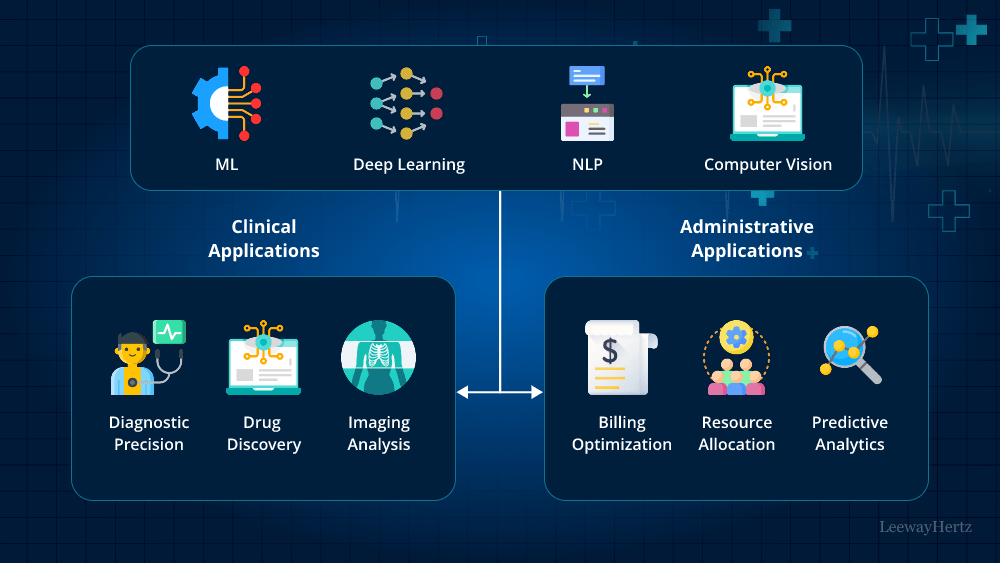
One of the most significant benefits of AI in healthcare is its ability to enhance diagnostic accuracy. AI algorithms, particularly those based on machine learning and deep learning, can analyze large datasets with incredible speed and precision. For example, AI-powered tools are being used to detect diseases such as cancer, heart conditions, and neurological disorders from medical images like X-rays, MRIs, and CT scans. These tools can identify patterns that might be missed by human eyes, leading to earlier and more accurate diagnoses.
In addition to image analysis, AI in healthcare is also being used to analyze genetic information and patient histories. By processing vast amounts of data, AI can help doctors make more informed decisions about treatment options and predict the likelihood of certain conditions. This level of precision not only improves patient outcomes but also reduces the likelihood of misdiagnosis.
2. Personalized Treatment Plans
AI in healthcare is also paving the way for more personalized treatment plans. Traditionally, treatment protocols have been based on a one-size-fits-all approach, but AI allows for more tailored solutions. By analyzing individual patient data, including genetic makeup, lifestyle, and other health indicators, AI can suggest personalized treatment options that are more effective for the patient.
For instance, AI can help oncologists choose the best chemotherapy drugs based on the genetic profile of a patient’s tumor, leading to better treatment responses and fewer side effects. Similarly, AI algorithms can recommend the most suitable medications for patients with chronic conditions, such as diabetes or hypertension, by considering their unique health data. This level of personalization in AI-driven healthcare not only improves treatment effectiveness but also enhances patient satisfaction and adherence to medical advice.
3. Streamlining Administrative Tasks
Beyond direct patient care, AI in healthcare is making a significant impact on administrative tasks. Hospitals and clinics often face a heavy burden of paperwork, which can lead to inefficiencies and increased costs. AI-powered tools, such as natural language processing (NLP) and robotic process automation (RPA), are helping to automate tasks like scheduling, billing, and data entry.
For example, AI can automatically extract information from medical records and input it into electronic health systems, reducing the workload on administrative staff and minimizing errors. Chatbots powered by AI are also being used to handle routine inquiries, such as appointment bookings and patient follow-ups, freeing up time for healthcare professionals to focus on more complex tasks.
Moreover, AI in healthcare is improving the management of supply chains, predicting inventory needs based on patient trends and historical data. This ensures that medical facilities are well-stocked with essential supplies, reducing delays in patient care.
4. Enhancing Patient Monitoring and Care
AI in healthcare extends beyond hospitals and clinics, offering solutions for continuous patient monitoring and care. Wearable devices and mobile health applications equipped with AI algorithms can track vital signs, such as heart rate, blood pressure, and glucose levels, in real-time. This data can be used to detect abnormalities early, allowing for timely intervention and potentially preventing serious complications.
For patients with chronic conditions, AI-driven remote monitoring systems provide a valuable tool for managing their health outside of traditional healthcare settings. These systems can alert healthcare providers to any significant changes in a patient’s condition, ensuring prompt responses and reducing the need for hospital readmissions. This continuous monitoring capability enhances the quality of care for patients while also easing the burden on healthcare facilities.
5. Improving Drug Discovery and Development
AI in healthcare is also revolutionizing the field of drug discovery and development. The traditional process of bringing a new drug to market is time-consuming and costly, often taking several years and billions of dollars. AI algorithms can significantly speed up this process by analyzing vast datasets to identify potential drug candidates, predict their effectiveness, and optimize their chemical structures.
For example, AI can simulate how different molecules interact with biological targets, helping researchers identify the most promising compounds for further testing. This reduces the time and resources required for preclinical trials and accelerates the overall drug development timeline. As a result, AI in healthcare is not only making the process more efficient but also increasing the likelihood of finding effective treatments for diseases that currently lack options.
6. Challenges and Future Directions
While the benefits of AI in healthcare are substantial, there are also challenges to consider. Data privacy and security are major concerns, as AI systems require access to sensitive patient information. Ensuring the ethical use of AI and maintaining patient trust will be critical as these technologies become more integrated into healthcare.
Moreover, the implementation of AI in healthcare requires significant investment in infrastructure and training for healthcare professionals. Addressing these challenges will be essential for maximizing the potential of AI in healthcare.
Looking ahead, the future of AI in healthcare is promising. As technology continues to evolve, AI will likely become even more integral to patient care, offering new opportunities for improving outcomes and efficiency. With continued innovation and careful consideration of ethical implications, AI in healthcare has the potential to transform the industry for the better.
 Tech Consultancy Blogs
Leave a comment