Introduction
In the fast-evolving world of Human Resources (HR), the integration of technology has continually reshaped how organizations manage their workforce. One of the most exciting advancements in this field is the application of generative AI in HR. This technology, which leverages artificial intelligence to create new content and solutions, is revolutionizing various HR functions. From recruitment to employee engagement, generative AI is making processes more efficient and effective. In this article, we’ll explore how generative AI is transforming HR and the benefits it brings to modern organizations.
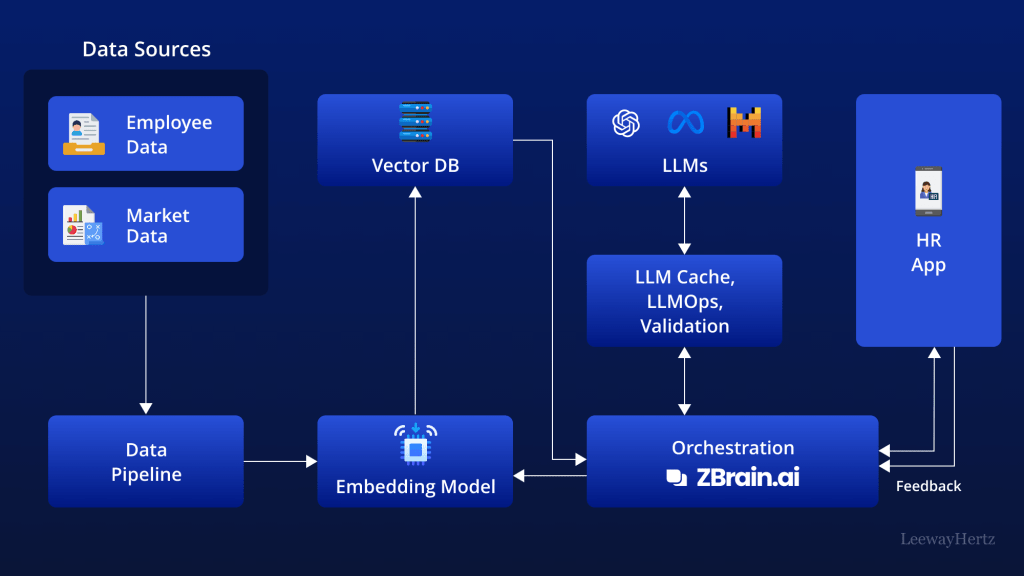
What is Generative AI?
Generative AI refers to a class of artificial intelligence technologies designed to produce new content or solutions based on patterns learned from existing data. Unlike traditional AI, which focuses on recognizing patterns or making predictions, generative AI creates novel outputs. In HR, this technology can generate job descriptions, design training materials, and even create personalized employee communication. The ability to automate these tasks allows HR professionals to focus on more strategic aspects of their roles.
Enhancing Recruitment Processes with Generative AI
Recruitment is one of the most critical functions in HR, and generative AI is making it more streamlined and effective. Traditional recruitment processes can be time-consuming, involving extensive manual work to sift through resumes, schedule interviews, and communicate with candidates. Generative AI simplifies these tasks by automating several aspects of recruitment.
For instance, generative AI in HR can analyze job requirements and generate well-crafted job descriptions that attract the right candidates. It can also screen resumes more efficiently, identifying the most suitable candidates based on predefined criteria. Additionally, AI-powered chatbots can handle initial candidate interactions, answering queries and scheduling interviews, freeing up HR professionals to focus on more complex tasks.
Personalizing Employee Training and Development
Employee training and development are crucial for organizational growth, but creating personalized training programs can be challenging. Generative AI can revolutionize this area by designing tailored learning experiences for employees. By analyzing individual performance data and learning preferences, generative AI can create customized training modules that address specific skill gaps and development needs.
Moreover, AI-driven platforms can generate interactive content, such as simulations and quizzes, to enhance the learning experience. This personalized approach not only improves employee engagement but also ensures that training is more relevant and effective.
Improving Employee Engagement and Communication
Effective communication is key to maintaining a motivated and engaged workforce. Generative AI can enhance employee engagement by creating personalized communication and feedback. AI algorithms can analyze employee feedback and sentiment to generate tailored messages and recommendations for managers.
Additionally, generative AI can automate routine communication tasks, such as generating monthly performance reports or sending out regular updates. This automation ensures that employees receive timely and relevant information, which can contribute to higher satisfaction and better overall communication within the organization.
Streamlining HR Administrative Tasks
HR departments are often bogged down by administrative tasks, such as managing employee records, processing payroll, and handling benefits administration. Generative AI can streamline these tasks by automating data entry, generating reports, and managing compliance documentation.
For example, AI can create detailed reports on employee attendance, performance, and compensation, reducing the time spent on manual data management. It can also handle routine administrative inquiries, such as benefits enrollment and payroll questions, allowing HR professionals to focus on more strategic initiatives.
Challenges and Considerations
While the benefits of generative AI in HR are significant, there are also challenges and considerations to keep in mind. Data privacy and security are major concerns, as AI systems handle sensitive employee information. Organizations must ensure that their AI tools comply with data protection regulations and maintain high standards of security.
Additionally, there is a need for transparency in AI decision-making processes. HR professionals must understand how AI systems generate their outputs to ensure fairness and avoid biases. Continuous monitoring and evaluation of AI tools are essential to address any potential issues and ensure that they align with organizational values and goals.
Conclusion
Generative AI is undoubtedly transforming the field of HR, offering numerous benefits in recruitment, training, communication, and administrative tasks. By leveraging this technology, organizations can enhance efficiency, improve employee experiences, and focus on strategic HR initiatives. However, it is crucial to address the associated challenges, such as data privacy and transparency, to fully realize the potential of generative AI in HR. As this technology continues to evolve, it will undoubtedly play an increasingly pivotal role in shaping the future of human resources.
 Tech Consultancy Blogs
Leave a comment