Introduction: Embracing AI in Automotive Innovation
Artificial Intelligence (AI) is revolutionizing various industries, and the automotive sector is no exception. As we move toward an era where technology and transportation converge, AI in automotive is playing a crucial role in shaping the future of driving. From enhancing safety to improving driving efficiency, AI is transforming how we interact with vehicles. This article explores the significant impact of AI in automotive and highlights key developments driving this transformation.
AI in Automotive Safety: A New Era of Protection
One of the most notable applications of AI in automotive technology is in the realm of safety. Advanced Driver Assistance Systems (ADAS), powered by AI, are becoming standard features in modern vehicles. These systems use AI algorithms to process data from various sensors and cameras to assist drivers in real-time. For instance, AI can detect obstacles, monitor blind spots, and provide lane-keeping assistance. By analyzing driving patterns and road conditions, AI in automotive safety systems helps prevent accidents and enhances overall road safety.
Autonomous Vehicles: The Pinnacle of AI in Automotive Technology
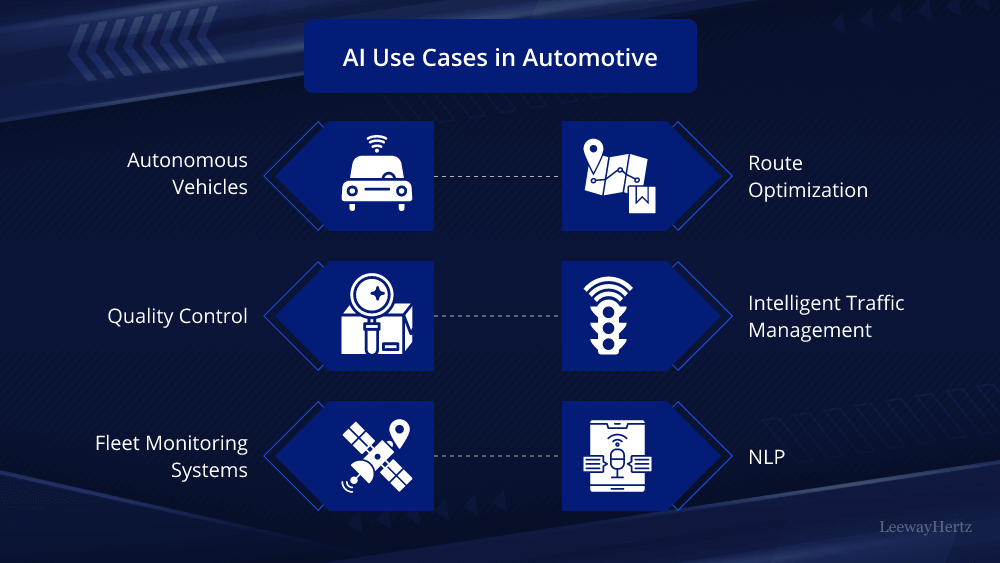
Autonomous or self-driving cars represent the most ambitious application of AI in automotive technology. Companies like Tesla, Waymo, and Cruise are at the forefront of developing fully autonomous vehicles. These cars rely on sophisticated AI algorithms to navigate roads, make decisions, and respond to dynamic driving environments. AI in automotive autonomous systems involves integrating various technologies, including computer vision, machine learning, and sensor fusion. The goal is to create vehicles that can drive safely and efficiently without human intervention.
Enhancing Driving Experience: AI in Automotive Infotainment Systems
AI is not only transforming safety but also enhancing the driving experience through infotainment systems. Modern vehicles are equipped with AI-powered infotainment systems that offer voice recognition, personalized recommendations, and seamless connectivity. These systems use natural language processing (NLP) to understand and respond to driver commands, making it easier to control navigation, music, and other features. AI in automotive infotainment creates a more enjoyable and convenient driving experience, allowing drivers to stay connected and focused on the road.
AI in Automotive Maintenance: Predictive and Preventive Measures
Maintaining a vehicle can be time-consuming and costly, but AI is streamlining this process. Predictive maintenance, powered by AI, uses data from vehicle sensors and historical performance to anticipate potential issues before they become serious problems. AI algorithms analyze patterns in the data to predict when parts may need servicing or replacement. This approach helps prevent breakdowns and reduces maintenance costs, ensuring that vehicles remain in optimal condition.
Optimizing Fleet Management: AI in Automotive Logistics
For businesses that rely on vehicle fleets, AI in automotive logistics offers significant advantages. AI-powered fleet management systems can optimize routes, monitor vehicle performance, and track driver behavior. By analyzing real-time data, these systems help businesses improve fuel efficiency, reduce operational costs, and enhance overall fleet productivity. AI in automotive logistics is revolutionizing how companies manage their fleets, leading to more efficient and cost-effective operations.
Challenges and Future Directions for AI in Automotive
While AI in automotive offers numerous benefits, it also presents challenges that need to be addressed. Issues such as data privacy, cybersecurity, and ethical considerations are critical concerns that must be managed as AI technology continues to advance. Additionally, the integration of AI in automotive systems requires significant investment and collaboration between automakers, technology providers, and regulatory bodies.
Looking ahead, the future of AI in automotive holds exciting possibilities. As technology continues to evolve, we can expect even more advanced applications, including improved autonomous driving capabilities, enhanced safety features, and greater integration with smart city infrastructure. The continued development and adoption of AI in automotive will shape the future of transportation, making driving safer, more efficient, and more enjoyable.
Conclusion: The Transformative Power of AI in Automotive
AI in automotive is reshaping the way we drive and interact with vehicles. From enhancing safety and enabling autonomous driving to improving infotainment and streamlining maintenance, AI is at the forefront of innovation in the automotive industry. As technology continues to advance, the role of AI in automotive will only grow, bringing about new opportunities and challenges. Embracing these advancements will be key to driving the future of transportation and ensuring that we continue to benefit from the transformative power of AI in automotive.
In summary, the integration of AI in automotive technology is revolutionizing the industry, offering safer, more efficient, and more enjoyable driving experiences. As we look to the future, AI will undoubtedly play an even more significant role in shaping the next generation of vehicles and transportation systems.
 Tech Consultancy Blogs
Leave a comment