Introduction
Artificial Intelligence (AI) is making significant strides across various sectors, and healthcare is no exception. The integration of AI in healthcare is revolutionizing the industry, bringing innovative solutions that enhance patient care, streamline operations, and improve diagnostic accuracy. This article explores how AI in healthcare is shaping the future of medicine and the challenges it presents.
AI in Healthcare: Enhancing Diagnostic Accuracy
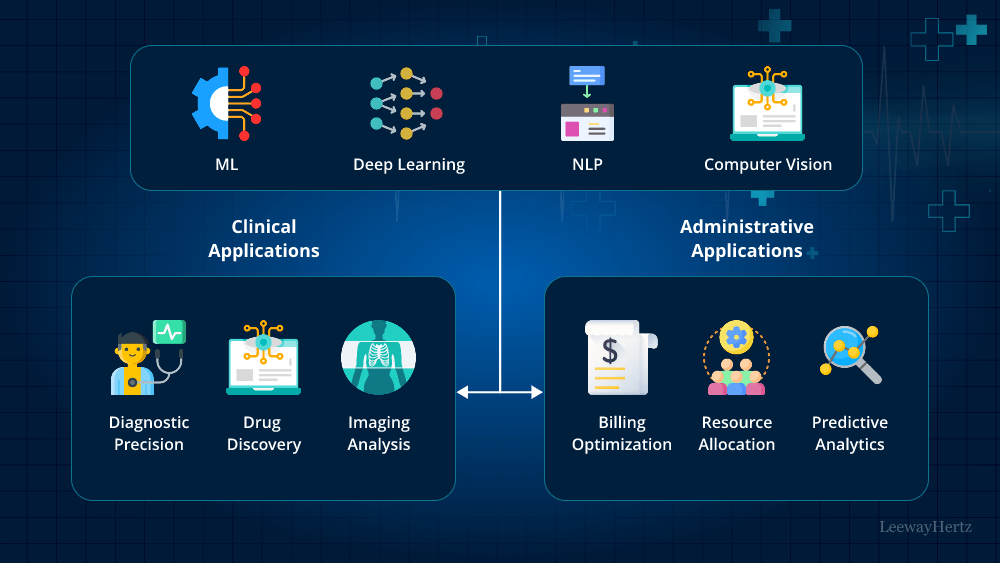
One of the most profound impacts of AI in healthcare is its ability to enhance diagnostic accuracy. Traditional diagnostic methods rely heavily on human expertise and interpretation, which can be prone to errors. AI algorithms, however, can analyze vast amounts of medical data quickly and with remarkable precision.
Machine learning models, a subset of AI, are trained on extensive datasets of medical images, patient records, and research studies. These models can identify patterns and anomalies that might be missed by human eyes. For example, AI-powered imaging tools can detect early signs of diseases such as cancer, enabling earlier and more effective treatments. Studies have shown that AI can match or even surpass human radiologists in certain diagnostic tasks, making it a valuable asset in medical imaging.
AI in Healthcare: Personalizing Treatment Plans
Personalized medicine is another area where AI in healthcare is making a significant impact. Traditional treatment plans often follow a one-size-fits-all approach, which may not be optimal for every patient. AI, however, allows for a more tailored approach by analyzing individual patient data and predicting the most effective treatments.
AI algorithms can process a patient’s genetic information, lifestyle factors, and medical history to recommend personalized treatment plans. For instance, AI can help identify which medications are likely to be most effective for a patient based on their unique genetic makeup. This personalized approach not only improves treatment outcomes but also reduces the risk of adverse reactions.
AI in Healthcare: Streamlining Administrative Tasks
Administrative tasks in healthcare can be time-consuming and prone to human error. AI in healthcare is helping to streamline these processes, allowing healthcare professionals to focus more on patient care. AI-powered systems can automate routine administrative tasks such as scheduling, billing, and documentation.
For example, natural language processing (NLP) tools can transcribe and organize medical records, reducing the time doctors spend on paperwork. AI chatbots can handle appointment scheduling and patient inquiries, improving efficiency and patient satisfaction. By automating these tasks, AI helps reduce administrative burdens and frees up valuable time for healthcare providers.
AI in Healthcare: Enhancing Drug Discovery and Development
The process of drug discovery and development is often lengthy and expensive. AI in healthcare is accelerating this process by analyzing large datasets to identify potential drug candidates and predict their effectiveness. Machine learning algorithms can sift through vast amounts of biomedical data to uncover new drug targets and optimize existing treatments.
AI can also predict how different drugs interact with the body, potentially identifying new therapeutic uses for existing medications. This not only speeds up the development process but also reduces costs and increases the likelihood of successful drug discovery. As a result, AI is helping to bring new and effective treatments to market more quickly.
Challenges and Considerations
Despite the promising benefits of AI in healthcare, there are several challenges and considerations to address. One major concern is data privacy and security. The use of AI requires access to sensitive patient data, raising concerns about how this data is protected and used. Ensuring robust security measures and compliance with data protection regulations is crucial.
Another challenge is the need for high-quality data. AI algorithms rely on large and diverse datasets to make accurate predictions. If the data is biased or incomplete, it can lead to incorrect conclusions and potential harm. It is essential to ensure that AI systems are trained on representative and high-quality data to avoid these issues.
Moreover, integrating AI into existing healthcare systems can be complex and requires careful planning. Healthcare professionals need training to effectively use AI tools, and there must be clear protocols for how AI recommendations are incorporated into clinical practice. Collaboration between AI developers and healthcare providers is essential to ensure that AI solutions are practical and beneficial.
Conclusion
AI in healthcare is transforming the industry in numerous ways, from enhancing diagnostic accuracy to personalizing treatment plans and streamlining administrative tasks. The advancements brought by AI hold the potential to improve patient outcomes, reduce costs, and accelerate drug discovery. However, addressing challenges related to data privacy, data quality, and integration is crucial for maximizing the benefits of AI in healthcare. As technology continues to evolve, the role of AI in healthcare will likely become even more central, driving innovation and improving the overall quality of care.
By staying informed about the latest developments and collaborating across sectors, we can harness the full potential of AI to create a more effective and efficient healthcare system for everyone.
 Tech Consultancy Blogs
Leave a comment