In the digital age, AI-based recommendation systems have become indispensable tools for businesses and users alike. These systems leverage artificial intelligence to deliver personalized experiences, making them crucial for enhancing user satisfaction and driving engagement. This article explores the types of AI-based recommendation systems, their use cases, and their development and implementation.
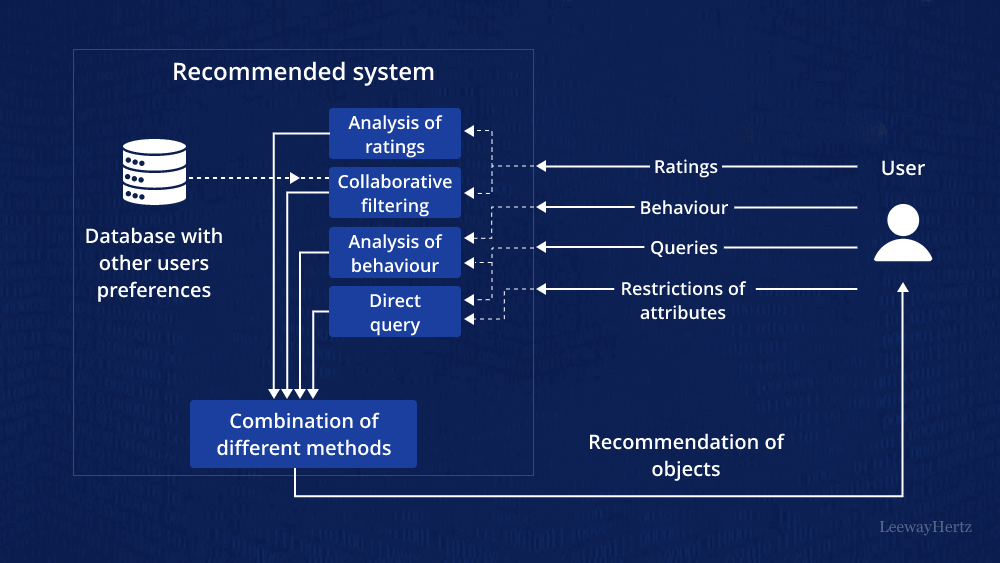
Types of AI-Based Recommendation Systems
AI-based recommendation systems come in various forms, each utilizing different algorithms and techniques to deliver tailored suggestions. Understanding these types can help businesses choose the most suitable approach for their needs.
1. Collaborative Filtering
Collaborative filtering is one of the most common types of AI-based recommendation systems. It works by analyzing user behavior and preferences to make recommendations based on similar users. There are two main types:
- User-Based Collaborative Filtering: This method recommends items by finding users with similar preferences and suggesting items they have liked. For instance, if User A and User B have similar tastes, User A will receive recommendations based on User B’s preferences.
- Item-Based Collaborative Filtering: This technique focuses on finding similarities between items rather than users. For example, if a user liked a particular movie, the system will recommend other movies that are similar to it based on the preferences of other users who liked the same movie.
2. Content-Based Filtering
Content-based filtering relies on the characteristics of items and user preferences. It suggests items similar to those a user has liked in the past. For instance, if a user frequently listens to pop music, the system will recommend new pop songs or artists.
3. Hybrid Recommendation Systems
Hybrid recommendation systems combine collaborative filtering and content-based filtering to improve recommendation accuracy. By integrating multiple approaches, these systems can overcome the limitations of each individual method and provide more robust recommendations.
4. Knowledge-Based Systems
Knowledge-based recommendation systems utilize domain-specific knowledge to make recommendations. They rely on explicit information about user needs and preferences, often gathered through questionnaires or user input. This approach is particularly useful in scenarios where user preferences are highly specific or require expert knowledge.
Use Cases of AI-Based Recommendation Systems
AI-based recommendation systems have a wide range of applications across various industries. Here are some prominent use cases:
1. E-Commerce
In e-commerce, AI-based recommendation systems enhance the shopping experience by suggesting products based on user behavior and preferences. For example, platforms like Amazon use recommendation algorithms to suggest related products, increasing the likelihood of additional purchases.
2. Streaming Services
Streaming platforms such as Netflix and Spotify rely heavily on AI-based recommendation systems to suggest movies, TV shows, or music based on user history and preferences. These systems ensure that users discover new content aligned with their tastes.
3. Social Media
Social media platforms use AI-based recommendation systems to personalize user feeds and suggest friends or groups. By analyzing user interactions and content preferences, these systems help users engage with relevant content and communities.
4. Online Advertising
AI-based recommendation systems play a crucial role in online advertising by targeting ads based on user behavior and interests. This personalization increases the effectiveness of ads and improves user engagement with advertisements.
Development of AI-Based Recommendation Systems
Developing an AI-based recommendation system involves several key steps. Each stage is critical to ensuring that the system provides accurate and relevant recommendations.
1. Data Collection
The first step in developing an AI-based recommendation system is gathering data. This data can include user preferences, interactions, and item characteristics. Quality and quantity of data are crucial for training effective recommendation models.
2. Algorithm Selection
Choosing the right algorithm is essential for creating an effective recommendation system. Developers must decide whether to use collaborative filtering, content-based filtering, hybrid methods, or knowledge-based systems based on the application’s requirements.
3. Model Training
Once the algorithm is selected, the next step is training the model. This involves feeding the collected data into the algorithm to enable it to learn patterns and make predictions. Training requires fine-tuning parameters to optimize performance.
4. Evaluation
After training the model, it must be evaluated to ensure its accuracy and effectiveness. This involves testing the system with a subset of data to measure how well it performs in making recommendations. Metrics such as precision, recall, and user satisfaction are used to assess performance.
5. Deployment and Maintenance
The final stage is deploying the recommendation system into a production environment. Continuous maintenance and updates are necessary to address changes in user behavior and preferences. Regular monitoring helps in refining the system and ensuring it remains effective over time.
Implementation of AI-Based Recommendation Systems
Implementing an AI-based recommendation system involves integrating it into the existing infrastructure and ensuring seamless operation. Here are some considerations for successful implementation:
1. Integration with Existing Platforms
Recommendation systems should be integrated with existing platforms, such as e-commerce websites or streaming services. This integration ensures that recommendations are delivered in real-time and are consistent with the user’s experience.
2. User Privacy and Data Security
Ensuring user privacy and data security is crucial when implementing AI-based recommendation systems. Compliance with data protection regulations and transparent data handling practices build trust with users and protect sensitive information.
3. Scalability
The system should be scalable to handle increasing amounts of data and user interactions. Scalable infrastructure ensures that the recommendation system remains efficient and effective as the user base grows.
4. Continuous Improvement
AI-based recommendation systems require ongoing refinement to adapt to changing user preferences and trends. Regular updates and improvements help maintain the relevance and accuracy of recommendations.
Conclusion
AI-based recommendation systems are powerful tools that enhance user experiences across various platforms. By understanding the different types of recommendation systems, their use cases, and the development and implementation processes, businesses can leverage these technologies to drive engagement and satisfaction. As AI continues to evolve, recommendation systems will become even more sophisticated, offering increasingly personalized and relevant suggestions for users worldwide.
 Tech Consultancy Blogs
Leave a comment