Introduction
In the rapidly evolving landscape of technology, Generative AI in manufacturing is emerging as a game-changer. This innovative technology is revolutionizing how products are designed, optimized, and produced. In this article, we explore the impact of Generative AI in manufacturing, its benefits, and the transformative potential it holds for the industry.
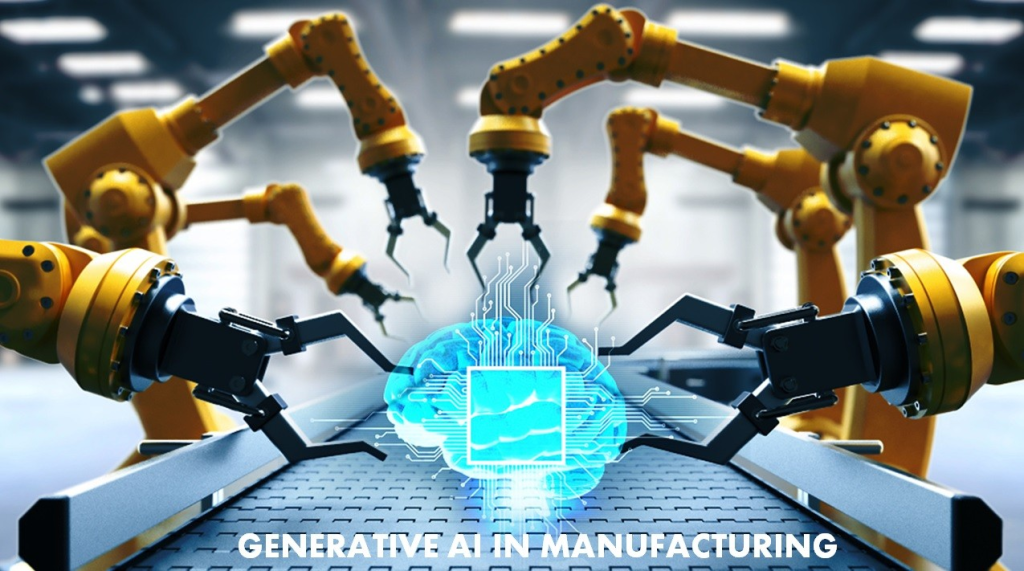
Understanding Generative AI
Generative AI refers to a subset of artificial intelligence that can create new content or designs based on learned patterns from existing data. Unlike traditional AI, which operates on pre-defined rules and datasets, Generative AI can produce novel outputs such as designs, models, and even entire systems. In the context of manufacturing, this technology leverages deep learning algorithms and neural networks to generate complex, optimized solutions that would be difficult or impossible to conceive manually.
Applications of Generative AI in Manufacturing
Generative AI in manufacturing offers a range of applications that enhance efficiency, creativity, and production quality. Here are some key areas where this technology is making a significant impact:
- Design Optimization
Generative AI in manufacturing is transforming design processes by creating optimized product designs. Traditional design methods often involve trial and error, which can be time-consuming and costly. With Generative AI, manufacturers can input initial parameters and constraints into the system, and the AI generates multiple design alternatives. These designs are evaluated based on performance, cost, and other criteria, allowing engineers to select the most effective solution. This approach not only accelerates the design phase but also leads to more innovative and efficient products.
- Predictive Maintenance
Another critical application of Generative AI in manufacturing is predictive maintenance. By analyzing data from machinery and equipment, Generative AI can predict potential failures or maintenance needs before they occur. This proactive approach helps reduce downtime, extend the lifespan of equipment, and minimize repair costs. Generative AI models can identify patterns and anomalies in data that might be missed by human operators, leading to more accurate predictions and timely interventions.
- Supply Chain Optimization
Generative AI in manufacturing also plays a crucial role in optimizing supply chains. The technology can analyze vast amounts of data related to inventory, production schedules, and demand forecasts. By generating optimized supply chain models, manufacturers can improve resource allocation, reduce lead times, and minimize disruptions. Generative AI helps companies make data-driven decisions, ensuring a more efficient and responsive supply chain.
- Customized Production
With the rise of personalized products and on-demand manufacturing, Generative AI is enabling customized production on a large scale. This technology allows manufacturers to create bespoke designs and solutions tailored to individual customer preferences. Generative AI can quickly adjust designs based on specific requirements, facilitating mass customization without compromising efficiency or increasing costs.
Benefits of Generative AI in Manufacturing
The integration of Generative AI in manufacturing brings several benefits that are transforming the industry:
- Increased Efficiency
Generative AI streamlines various manufacturing processes, from design to production. By automating design generation and optimization, manufacturers can reduce the time and effort required for these tasks. Additionally, predictive maintenance and supply chain optimization contribute to overall operational efficiency.
- Enhanced Innovation
Generative AI fosters innovation by generating novel designs and solutions that might not be immediately apparent through traditional methods. This capability allows manufacturers to explore new possibilities and push the boundaries of product development, leading to more advanced and competitive offerings.
- Cost Savings
By optimizing designs, reducing downtime, and improving supply chain management, Generative AI helps manufacturers achieve significant cost savings. The technology minimizes waste, lowers production costs, and enhances resource utilization, contributing to a more cost-effective manufacturing process.
- Improved Quality
Generative AI enhances product quality by providing more precise and optimized designs. The technology also contributes to better maintenance practices and supply chain management, ensuring that products meet high-quality standards and perform reliably.
Challenges and Considerations
While Generative AI in manufacturing offers numerous benefits, there are also challenges and considerations to address:
- Data Quality and Security
The effectiveness of Generative AI depends on the quality and security of the data used for training and analysis. Manufacturers need to ensure that their data is accurate, comprehensive, and protected against breaches.
- Integration with Existing Systems
Integrating Generative AI with existing manufacturing systems can be complex. Manufacturers must consider how to seamlessly incorporate this technology into their current workflows and processes.
- Skill Requirements
Implementing and managing Generative AI requires specialized skills and expertise. Manufacturers may need to invest in training and development to ensure that their teams can effectively leverage this technology.
Conclusion
Generative AI in manufacturing is a powerful technology that is reshaping the industry. From design optimization to predictive maintenance and supply chain management, its applications are driving efficiency, innovation, and cost savings. As manufacturers continue to explore and adopt Generative AI, they will unlock new possibilities for growth and advancement in the ever-evolving manufacturing landscape. Embracing this technology today can position companies for success in the future, paving the way for a more intelligent and responsive manufacturing environment.
 Tech Consultancy Blogs
Leave a comment