Artificial Intelligence (AI) has revolutionized numerous industries, and the finance sector is no exception. AI for financial reporting is becoming a game-changer, enhancing accuracy, efficiency, and transparency. This article explores how AI is reshaping financial reporting, its benefits, applications, and future potential.
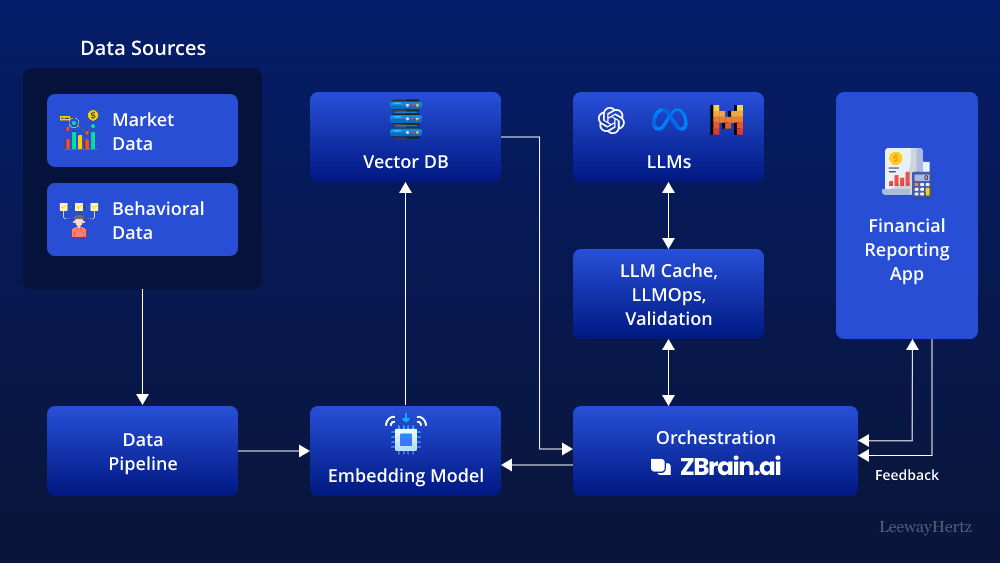
Understanding AI for Financial Reporting
AI for financial reporting involves using advanced algorithms and machine learning models to automate and improve the accuracy of financial data analysis and reporting. Traditional financial reporting processes are often time-consuming and prone to human error. However, AI can handle vast amounts of data quickly and accurately, reducing the likelihood of mistakes and allowing finance professionals to focus on more strategic tasks.
Benefits of AI for Financial Reporting
- Enhanced Accuracy and Precision:
AI algorithms can analyze and process financial data with a high degree of accuracy, minimizing errors that can occur with manual processing. This ensures that financial statements and reports are precise, reliable, and trustworthy. - Time and Cost Efficiency:
By automating routine and repetitive tasks, AI for financial reporting saves significant time and resources. Financial professionals can allocate their time to more value-added activities such as strategic planning and analysis. - Real-Time Financial Insights:
AI systems can provide real-time analysis of financial data, offering up-to-date insights that are crucial for timely decision-making. This is particularly important in fast-paced financial markets where delays can lead to missed opportunities or financial losses. - Fraud Detection and Risk Management:
AI can identify unusual patterns and anomalies in financial data that may indicate fraudulent activities. This enhances the ability of organizations to detect and prevent fraud, thereby safeguarding their financial integrity.
Applications of AI in Financial Reporting
- Automated Data Entry and Reconciliation:
AI-powered tools can automatically extract data from various sources, classify it, and input it into financial systems. This reduces the need for manual data entry and ensures consistency and accuracy. - Predictive Analysis and Forecasting:
AI can analyze historical financial data to predict future trends and outcomes. This helps organizations make informed decisions regarding investments, budgeting, and resource allocation. - Natural Language Processing (NLP) for Report Generation:
NLP, a subset of AI, can generate financial reports by interpreting and summarizing complex financial data. This allows for the creation of comprehensive reports that are easy to understand for stakeholders. - Regulatory Compliance and Audit:
AI systems can continuously monitor financial transactions and ensure compliance with regulatory requirements. They can also assist in auditing by analyzing large datasets to identify discrepancies and ensure accuracy.
The Future of AI in Financial Reporting
The adoption of AI for financial reporting is still in its early stages, but the potential is immense. As technology advances, AI systems will become even more sophisticated, offering greater capabilities and further transforming the financial reporting landscape.
- Integration with Blockchain:
Combining AI with blockchain technology can enhance the transparency and security of financial transactions and reporting. Blockchain provides a tamper-proof record of transactions, while AI can analyze this data to ensure accuracy and compliance. - Advanced Predictive Analytics:
Future AI systems will offer more advanced predictive analytics, enabling organizations to forecast with higher precision. This will enhance strategic planning and decision-making processes. - Personalized Financial Reporting:
AI can tailor financial reports to meet the specific needs of different stakeholders. By understanding the preferences and requirements of users, AI systems can generate personalized reports that are more relevant and useful. - Continuous Learning and Improvement:
AI systems are capable of continuous learning and improvement. As they process more data, they become more accurate and efficient. This ongoing enhancement will further improve the quality and reliability of financial reporting.
Challenges and Considerations
While the benefits of AI for financial reporting are substantial, there are also challenges that need to be addressed:
- Data Privacy and Security:
The use of AI requires access to vast amounts of financial data, raising concerns about data privacy and security. Organizations must ensure that robust measures are in place to protect sensitive information. - Implementation Costs:
The initial cost of implementing AI systems can be high. However, the long-term benefits often outweigh the initial investment, making it a worthwhile consideration for organizations. - Skillset Requirements:
The adoption of AI in financial reporting requires a workforce with the necessary skills to operate and manage AI systems. Continuous training and development are essential to keep up with technological advancements.
Conclusion
AI for financial reporting is transforming the way organizations manage and analyze their financial data. The benefits of enhanced accuracy, efficiency, and real-time insights are driving the adoption of AI in the finance sector. As technology continues to evolve, the future of AI in financial reporting looks promising, offering even greater capabilities and opportunities for innovation. Embracing AI for financial reporting is not just a trend but a strategic move towards a more efficient and reliable financial future.
 Tech Consultancy Blogs
Leave a comment