Introduction
In today’s fast-paced financial environment, compliance is critical. Financial institutions must adhere to a plethora of regulations designed to ensure market integrity, protect consumers, and prevent financial crimes. However, the sheer volume and complexity of these regulations pose significant challenges. Enter AI for financial compliance—a powerful tool revolutionizing the way financial institutions meet their regulatory obligations.
Understanding Financial Compliance
Financial compliance refers to the adherence to laws, regulations, guidelines, and specifications relevant to the financial sector. Regulatory bodies such as the Financial Conduct Authority (FCA) in the UK, the Securities and Exchange Commission (SEC) in the US, and numerous others globally mandate these rules. They aim to ensure transparency, prevent fraud, and protect consumers. Non-compliance can result in hefty fines, reputational damage, and even legal action.
The Role of AI in Financial Compliance
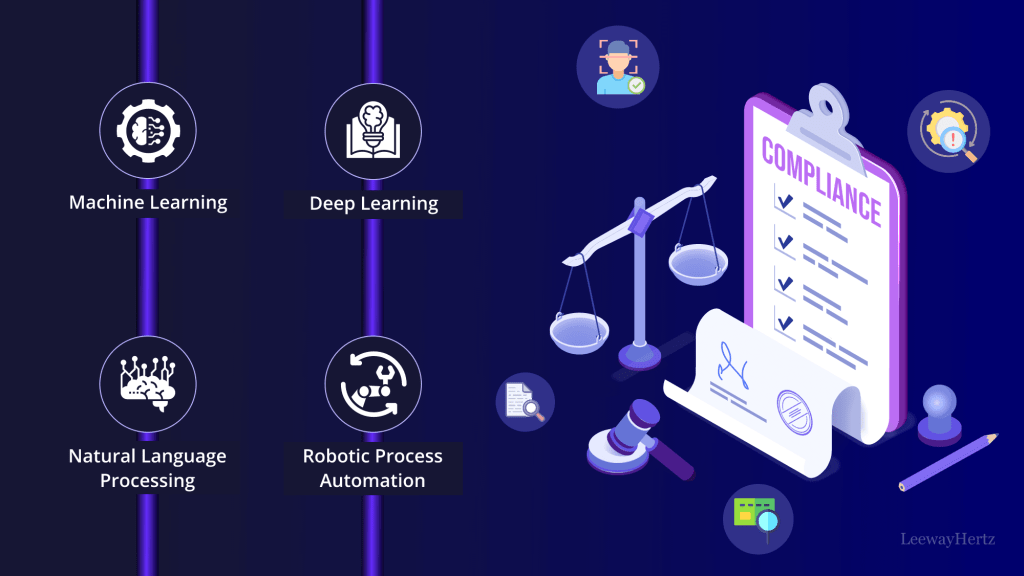
AI for financial compliance leverages technologies such as machine learning, natural language processing, and data analytics to streamline and enhance compliance processes. Here’s how AI is making a difference:
- Automated Monitoring and Reporting Traditional compliance monitoring often involves manual checks, which are time-consuming and prone to human error. AI systems can automatically monitor transactions in real-time, flagging any suspicious activity that may indicate fraud or money laundering. By continuously analyzing data, AI can generate accurate and timely compliance reports, ensuring that institutions meet regulatory requirements efficiently.
- Risk Assessment and Management AI can analyze vast amounts of data to identify potential risks more effectively than manual methods. Machine learning algorithms can detect patterns and anomalies that might suggest fraudulent activities or compliance breaches. This proactive approach helps institutions mitigate risks before they escalate, maintaining the integrity of financial operations.
- Regulatory Updates and Adaptation Keeping up with regulatory changes is a daunting task for compliance teams. AI systems equipped with natural language processing can scan and interpret new regulations as they are released. These systems can then update compliance protocols automatically, ensuring that financial institutions remain compliant without delay.
- Customer Due Diligence Know Your Customer (KYC) and Anti-Money Laundering (AML) processes are critical components of financial compliance. AI can streamline these processes by quickly verifying customer identities, assessing risk profiles, and continuously monitoring transactions for unusual behavior. This not only enhances compliance but also improves the customer experience by reducing verification times.
Benefits of AI for Financial Compliance
Implementing AI for financial compliance offers several significant benefits:
- Efficiency and Cost Savings AI systems can process vast amounts of data quickly and accurately, reducing the need for extensive manual labor. This efficiency translates into significant cost savings for financial institutions, allowing them to allocate resources more effectively.
- Enhanced Accuracy Human error is a common issue in compliance processes. AI minimizes these errors by providing consistent and accurate analysis. This reliability is crucial in an industry where even minor mistakes can have serious consequences.
- Scalability As financial institutions grow, so does the volume of transactions and the complexity of compliance requirements. AI systems can easily scale to accommodate this growth, ensuring that compliance processes remain robust and effective regardless of the institution’s size.
- Proactive Compliance AI’s ability to analyze data in real-time allows for proactive compliance. Instead of reacting to breaches after they occur, institutions can prevent them from happening in the first place. This proactive approach is essential for maintaining trust and integrity in the financial sector.
Challenges and Considerations
While AI for financial compliance offers numerous benefits, it also presents challenges that institutions must address:
- Data Privacy and Security Financial data is highly sensitive, and ensuring its privacy and security is paramount. Institutions must implement robust cybersecurity measures to protect data from breaches and ensure compliance with data protection regulations.
- Algorithmic Bias AI systems are only as good as the data they are trained on. If the training data contains biases, the AI system may produce biased outcomes. Financial institutions must regularly audit and update their AI systems to ensure fairness and accuracy.
- Regulatory Acceptance Regulatory bodies are still adapting to the use of AI in compliance. Institutions must work closely with regulators to ensure that AI systems meet all necessary standards and are transparent in their operations.
Conclusion
AI for financial compliance is transforming the way financial institutions operate, offering enhanced efficiency, accuracy, and scalability. By automating monitoring and reporting, improving risk assessment, staying updated with regulatory changes, and streamlining customer due diligence, AI is proving to be an invaluable tool in the compliance toolkit. However, institutions must address challenges such as data privacy, algorithmic bias, and regulatory acceptance to fully realize the benefits of AI. As the financial industry continues to evolve, AI for financial compliance will undoubtedly play an increasingly vital role in ensuring a secure and compliant financial environment.
 Tech Consultancy Blogs
Leave a comment