Introduction
In the fast-paced world of logistics, efficiency and accuracy are paramount. Generative AI, a cutting-edge technology, is poised to transform this industry by optimizing operations, enhancing decision-making, and driving innovation.
Understanding Generative AI
Generative AI refers to a subset of artificial intelligence techniques where machines learn to generate new content or data that resembles input data they have been trained on. Unlike traditional AI, which is limited to recognizing patterns or making predictions based on existing data, generative AI can create entirely new outputs, such as images, text, or scenarios.
Applications in Logistics
- Route Optimization
Generative AI platforms analyze vast datasets including historical traffic patterns, weather conditions, and delivery schedules to recommend the most efficient routes. By continuously learning and adapting, these systems can optimize delivery routes in real-time, reducing fuel consumption and delivery times. - Demand Forecasting
Predicting consumer demand is crucial for logistics companies to manage inventory efficiently. Generative AI can analyze historical sales data, market trends, and even social media activity to forecast demand more accurately than traditional methods. This helps in preventing stockouts and overstock situations, thereby improving overall supply chain management. - Warehouse Management
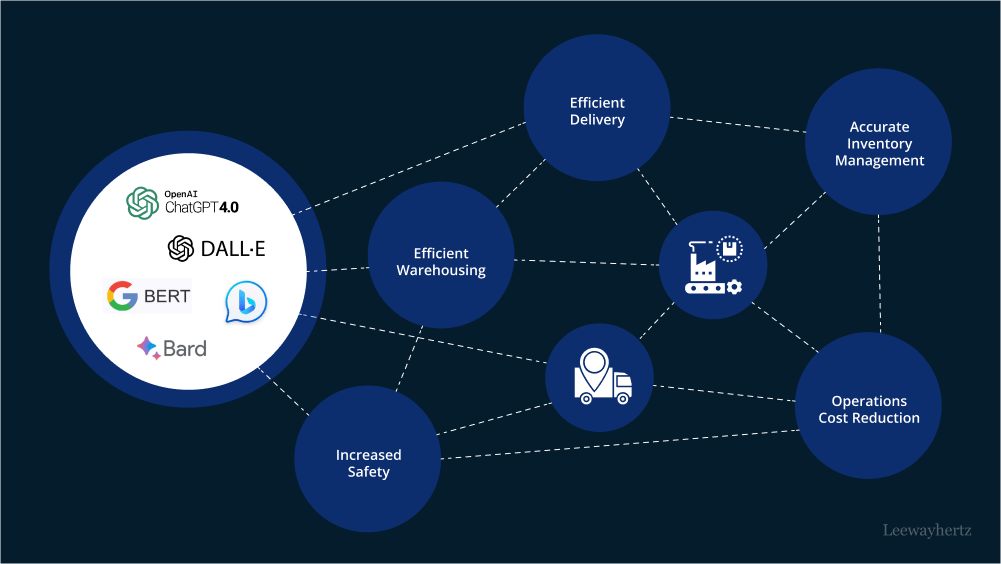
Generative AI enhances warehouse operations by optimizing inventory placement, automating picking processes, and predicting optimal storage conditions. This ensures that warehouses operate at maximum efficiency, reducing labor costs and minimizing errors. - Last-Mile Delivery
The final leg of delivery, known as last-mile logistics, is often the most challenging and costly. Generative AI platforms can analyze customer data, traffic patterns, and real-time conditions to optimize delivery routes and schedules dynamically. This not only improves delivery speed but also enhances customer satisfaction.
Benefits of Generative AI in Logistics
- Cost Efficiency: By optimizing routes, reducing fuel consumption, and minimizing labor costs, generative AI helps logistics companies operate more cost-effectively.
- Improved Accuracy: AI-driven demand forecasting and inventory management lead to more accurate predictions, reducing stockouts and excess inventory.
- Enhanced Customer Experience: Faster, more reliable deliveries driven by AI improve customer satisfaction and loyalty.
- Innovation: Generative AI encourages innovation by allowing logistics companies to explore new ways of improving operations and customer service.
Challenges and Considerations
While generative AI holds immense promise for the logistics industry, several challenges must be addressed:
- Data Privacy and Security: Handling sensitive customer data requires robust security measures to prevent breaches.
- Integration Complexity: Integrating AI systems with existing logistics infrastructure can be complex and requires careful planning and investment.
- Ethical Concerns: AI-driven decision-making raises ethical questions, such as accountability for errors or biases in algorithms.
Future Outlook
As generative AI technology continues to evolve, its impact on logistics will deepen. Future advancements may include more sophisticated predictive models, enhanced autonomous systems for warehouse operations, and AI-powered customer service solutions.
Conclusion
Generative AI platforms are revolutionizing logistics by optimizing operations, improving efficiency, and enhancing customer satisfaction. While challenges remain, the potential benefits of integrating AI into logistics workflows are undeniable. As companies continue to adopt and innovate with generative AI, the logistics industry is poised for a transformative journey towards greater efficiency and competitiveness in the global marketplace.
Read More: https://www.leewayhertz.com/generative-ai-platform-for-logistics/
 Tech Consultancy Blogs
Leave a comment