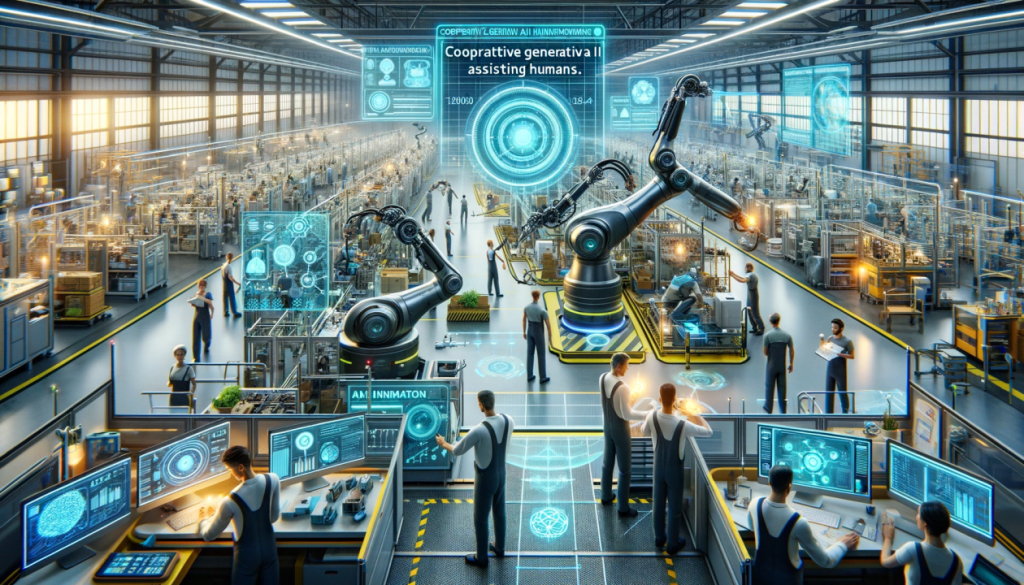
In today’s rapidly evolving industrial landscape, Generative AI is revolutionizing the manufacturing sector by enabling unprecedented levels of innovation, efficiency, and cost-effectiveness. This technology, which leverages machine learning algorithms to autonomously generate designs and solutions, is reshaping traditional processes and pushing the boundaries of what’s possible in product development and production. Let’s explore how Generative AI is making its mark in manufacturing across various fronts.
Enhancing Design Creativity and Efficiency
Generative AI in manufacturing is first and foremost a game-changer in design. Traditionally, engineers and designers would rely on their expertise and a limited set of design parameters to create products. However, with Generative AI, these professionals can input constraints such as material properties, manufacturing methods, and performance requirements, and let the AI algorithm explore a vast range of potential designs.
This capability not only accelerates the design process but also uncovers innovative solutions that human designers might overlook. By iterating through countless design variations, Generative AI optimizes for factors like strength, weight, and cost, leading to designs that are both efficient and cost-effective. For example, Airbus has employed Generative Design to create complex aircraft components that are lighter and stronger than conventionally designed parts.
Streamlining Production Processes
Beyond design, Generative AI is streamlining production processes in manufacturing. By analyzing historical data, including production line performance and supply chain logistics, AI algorithms can identify inefficiencies and suggest optimizations. This predictive capability allows manufacturers to anticipate maintenance needs, minimize downtime, and optimize inventory levels.
Moreover, Generative AI can optimize manufacturing workflows by generating schedules that maximize machine utilization and minimize energy consumption. This level of automation not only improves efficiency but also reduces operational costs and enhances overall productivity. Companies like Siemens have integrated AI-driven predictive maintenance systems into their factories, resulting in significant savings and improved reliability.
Customization and Personalization
One of the most promising aspects of Generative AI in manufacturing is its ability to facilitate mass customization. Traditionally, customization has been costly and time-consuming, requiring significant manual intervention. However, with AI-powered systems, manufacturers can efficiently tailor products to meet individual customer preferences without compromising on production efficiency.
For example, sportswear companies like Adidas use Generative AI to design personalized shoes that cater to each customer’s unique biomechanical data. By analyzing customer inputs and preferences, AI algorithms can generate designs that optimize comfort, performance, and style. This capability not only enhances customer satisfaction but also opens up new market opportunities for manufacturers seeking to differentiate their offerings.
Ensuring Quality and Safety
Quality control is paramount in manufacturing, where defects can lead to costly recalls and reputational damage. Generative AI plays a crucial role in ensuring product quality and safety by analyzing real-time data from sensors and inspection systems. By detecting anomalies and deviations from expected standards, AI algorithms can flag potential issues before they escalate into larger problems.
Additionally, AI-powered quality control systems can adapt and learn from past data, continuously improving their accuracy and reliability over time. This proactive approach not only reduces waste and rework but also enhances overall product consistency and reliability. Automotive manufacturers like BMW have implemented AI-driven quality control systems to enhance the precision and reliability of their production lines.
Future Outlook and Challenges
Looking ahead, the future of Generative AI in manufacturing appears promising but not without challenges. As the technology continues to evolve, manufacturers must navigate issues related to data privacy, algorithm bias, and workforce reskilling. Moreover, integrating AI into existing manufacturing ecosystems requires careful planning and investment in infrastructure and training.
However, the potential benefits far outweigh these challenges. Generative AI promises to drive innovation, improve efficiency, and create new opportunities across the manufacturing sector. By embracing AI-driven technologies, manufacturers can stay competitive in an increasingly digital and interconnected world.
In conclusion, Generative AI is transforming manufacturing by revolutionizing design processes, streamlining production workflows, enabling mass customization, and enhancing quality control. As this technology continues to mature, its impact on the industry will only grow stronger, paving the way for a future where intelligent machines collaborate seamlessly with human expertise to drive innovation and efficiency in manufacturing.
Through strategic adoption and integration, manufacturers can harness the full potential of Generative AI to unlock new possibilities and achieve sustainable growth in the digital age.
 Tech Consultancy Blogs
Leave a comment