In the age of rapid technological advancements, artificial intelligence (AI) stands out as a transformative force reshaping various sectors. One of the most significant impacts of AI is in decision making, where it enhances efficiency, accuracy, and innovation. This article delves into the realm of AI in decision making, exploring its benefits, applications, challenges, and future prospects.
The Role of AI in Decision Making
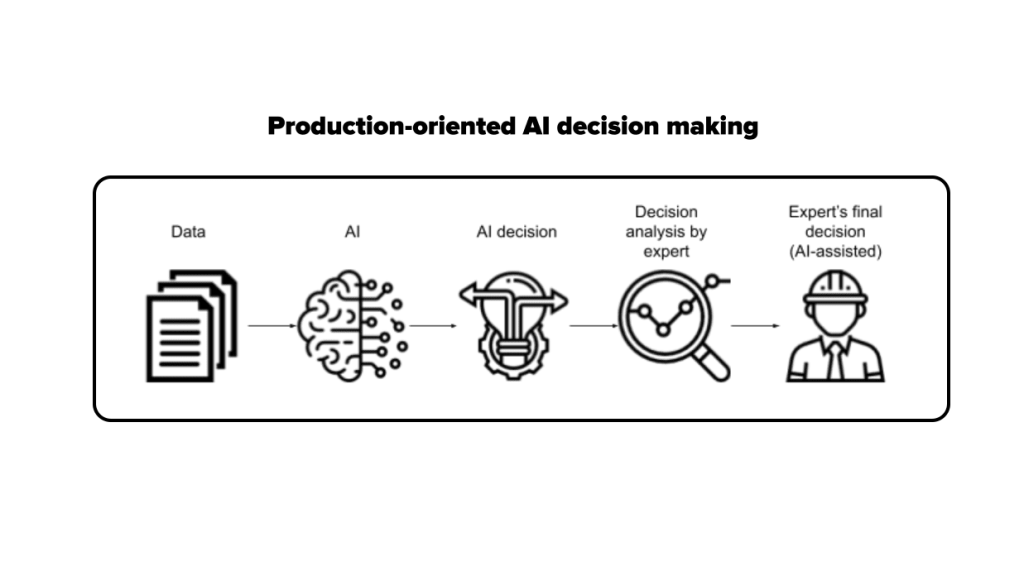
AI in decision making refers to the use of algorithms, machine learning, and data analytics to assist or automate the process of making choices. From everyday decisions to complex strategic planning, AI can process vast amounts of data, recognize patterns, and offer insights that would be challenging for humans to achieve alone.
Benefits of AI in Decision Making
1. Enhanced Efficiency and Speed:
AI systems can process and analyze large datasets at remarkable speeds. This capability allows organizations to make decisions faster, which is crucial in fast-paced industries such as finance, healthcare, and logistics.
2. Improved Accuracy:
By minimizing human errors and biases, AI contributes to more accurate decision-making processes. For instance, in medical diagnostics, AI algorithms can detect anomalies in imaging data with higher precision than human radiologists.
3. Data-Driven Insights:
AI leverages data to uncover hidden patterns and correlations that might go unnoticed by human analysts. These insights can lead to more informed and effective decisions, particularly in fields like marketing, where understanding consumer behavior is key.
4. Cost Reduction:
Automating routine decision-making tasks with AI can significantly reduce operational costs. Companies can allocate resources more efficiently, focusing human talent on strategic and creative endeavors.
Applications of AI in Decision Making
1. Healthcare:
In healthcare, AI aids in diagnosis, treatment planning, and patient management. AI-powered systems analyze patient data to recommend personalized treatment plans, predict disease outbreaks, and improve clinical outcomes.
2. Finance:
AI transforms financial decision making by enhancing risk assessment, fraud detection, and investment strategies. Robo-advisors use AI to provide personalized investment advice, while predictive analytics help financial institutions manage risks more effectively.
3. Supply Chain Management:
AI optimizes supply chain operations by forecasting demand, managing inventory, and improving logistics. Predictive analytics enable companies to anticipate market trends and adjust their supply chain strategies accordingly.
4. Marketing and Sales:
AI-driven tools analyze consumer data to create targeted marketing campaigns, predict customer preferences, and enhance customer relationship management. This leads to higher customer satisfaction and increased sales.
5. Human Resources:
AI streamlines HR processes such as recruitment, employee engagement, and performance evaluation. AI algorithms can screen resumes, predict employee turnover, and recommend training programs tailored to individual needs.
Challenges of AI in Decision Making
1. Data Privacy and Security:
The extensive use of data in AI decision making raises concerns about privacy and security. Ensuring that sensitive information is protected from breaches and misuse is paramount.
2. Ethical Considerations:
AI systems can inherit biases present in their training data, leading to unfair or discriminatory decisions. It is crucial to develop ethical guidelines and frameworks to address these issues and ensure fairness.
3. Dependence on Quality Data:
The effectiveness of AI in decision making is heavily reliant on the quality of the data it processes. Inaccurate or incomplete data can lead to flawed decisions, highlighting the need for robust data management practices.
4. Human-AI Collaboration:
Balancing the roles of human judgment and AI recommendations is a challenge. While AI can provide data-driven insights, human intuition and contextual understanding remain essential for making well-rounded decisions.
Future Prospects of AI in Decision Making
1. Integration with IoT:
The integration of AI with the Internet of Things (IoT) will further enhance decision making by providing real-time data from connected devices. This will lead to smarter environments in sectors like smart cities, healthcare, and manufacturing.
2. Advancements in AI Technologies:
Continued advancements in AI, such as deep learning and natural language processing, will improve the accuracy and applicability of AI in decision making. These technologies will enable more sophisticated analysis and better human-AI interactions.
3. Wider Adoption Across Industries:
As AI becomes more accessible and affordable, its adoption across various industries will increase. Smaller businesses and sectors previously hesitant to embrace AI will start leveraging its benefits, leading to a broader impact on decision making.
4. Ethical AI Development:
Efforts to develop ethical AI frameworks and regulations will gain momentum. Ensuring that AI systems are transparent, accountable, and fair will be crucial for their acceptance and trustworthiness in decision making.
Conclusion
AI in decision making is revolutionizing how choices are made across various domains. Its ability to process vast amounts of data, provide accurate insights, and automate routine tasks offers significant advantages. However, addressing challenges related to data privacy, ethics, and human-AI collaboration is essential to harness its full potential. As AI technology continues to evolve, its role in decision making will undoubtedly become even more integral, paving the way for smarter, more efficient, and innovative solutions in our increasingly complex world.
 Tech Consultancy Blogs
Leave a comment