Artificial Intelligence (AI) is revolutionizing industries, making applications smarter and more efficient. Building an AI app can seem daunting, but with the right approach, it becomes a manageable and rewarding endeavor. This guide will walk you through the essential steps on how to build an AI app, from initial concept to deployment.
Understanding the Basics of AI
What is Artificial Intelligence?
Artificial Intelligence refers to the simulation of human intelligence in machines. These systems are programmed to think, learn, and make decisions, mimicking cognitive functions such as problem-solving and pattern recognition.
Types of AI Applications
AI applications range from simple automation tools to complex systems capable of natural language processing, image recognition, and predictive analytics. Common examples include virtual assistants, recommendation systems, and self-driving cars.
Defining Your AI App’s Purpose
Identifying the Problem
Before diving into development, clearly define the problem your AI app aims to solve. Understanding the specific needs of your target audience will guide your app’s functionality and features.
Setting Goals and Objectives
Establish what you want to achieve with your AI app. Whether it’s improving user experience, automating tasks, or providing insights through data analysis, clear objectives will help shape your development process.
Gathering and Preparing Data
Data Collection
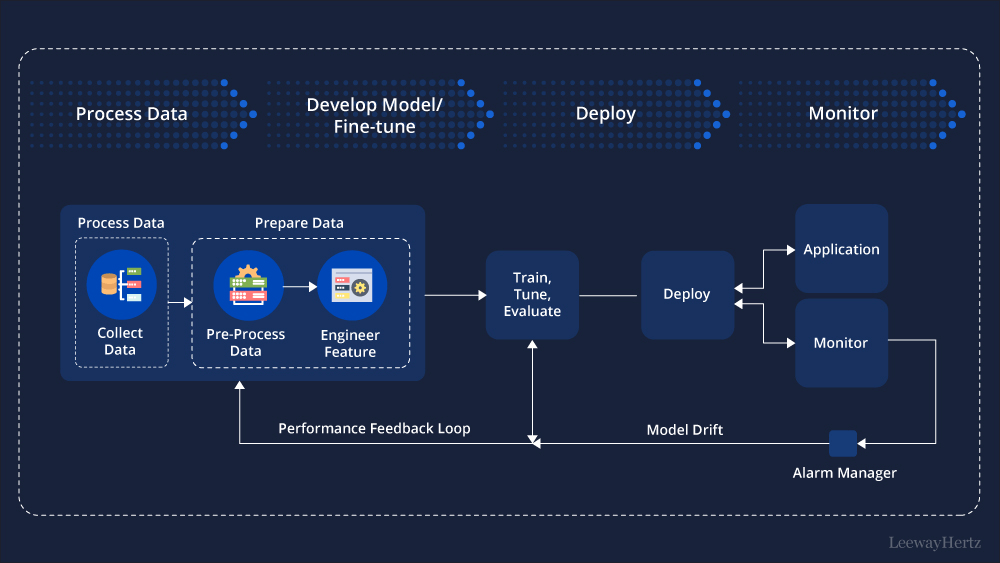
Data is the backbone of any AI application. Collect relevant and high-quality data that will be used to train your AI model. This can include text, images, audio, or structured data from databases.
Data Preprocessing
Preprocessing involves cleaning and organizing your data to make it suitable for training. This may include removing duplicates, handling missing values, and normalizing data. Proper preprocessing ensures your model learns effectively and produces accurate results.
Choosing the Right AI Model
Types of AI Models
There are various AI models to choose from, including:
- Supervised Learning: Models that learn from labeled data.
- Unsupervised Learning: Models that find patterns in unlabeled data.
- Reinforcement Learning: Models that learn through trial and error.
- Deep Learning: Models that use neural networks to learn from large amounts of data.
Selecting the Model
Choose a model that best suits your app’s requirements. For instance, a convolutional neural network (CNN) is ideal for image recognition tasks, while recurrent neural networks (RNN) work well for sequential data like text or speech.
Developing Your AI App
Choosing a Development Framework
Select a development framework that supports AI functionalities. Popular frameworks include TensorFlow, PyTorch, and Keras. These frameworks offer pre-built components and libraries that simplify the development process.
Building the Model
Start by designing the architecture of your AI model. Define the input, hidden, and output layers based on your chosen framework. Train your model using the prepared data, adjusting parameters and hyperparameters to optimize performance.
Integrating the Model
Once trained, integrate the AI model into your app. This may involve creating APIs to connect the model with your app’s frontend or backend systems. Ensure seamless communication between different components of your app.
Testing and Validation
Model Evaluation
Evaluate your AI model using metrics such as accuracy, precision, recall, and F1-score. This will help you understand how well your model performs and identify areas for improvement.
User Testing
Conduct user testing to gather feedback on your app’s functionality and user experience. This step is crucial for identifying any issues and ensuring your app meets user expectations.
Deployment and Maintenance
Deploying the App
Deploy your AI app to a production environment. Choose a reliable hosting platform that can handle the computational demands of AI models. Monitor the app for any issues and ensure it runs smoothly.
Regular Updates
AI models need regular updates to maintain accuracy and performance. Continuously collect new data, retrain your model, and release updates to improve your app over time.
Conclusion
Building an AI app involves a series of well-defined steps, from understanding the basics of AI to deploying and maintaining your app. By following this comprehensive guide on how to build an AI app, you can create innovative solutions that leverage the power of artificial intelligence to solve real-world problems. Remember, the key to a successful AI app lies in careful planning, data management, and continuous improvement.
 Tech Consultancy Blogs
Leave a comment