In today’s fast-paced business landscape, the efficient management of inventory stands as a critical aspect of success. Whether it’s a small-scale retail store or a large multinational corporation, the ability to optimize inventory levels, reduce costs, and meet customer demands is paramount. Traditional inventory management methods often fall short in coping with the complexities of modern supply chains and consumer behaviors. However, with the advent of Artificial Intelligence (AI), a new era of inventory management has emerged, offering unprecedented levels of efficiency and accuracy.
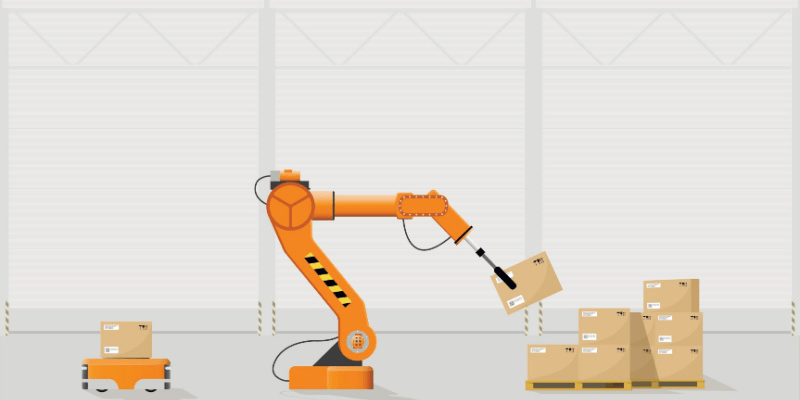
AI in inventory management represents a paradigm shift in how businesses handle their stock. By leveraging advanced algorithms, machine learning, and predictive analytics, AI empowers organizations to make data-driven decisions in real-time, resulting in optimized inventory levels, reduced holding costs, and improved customer satisfaction. Let’s delve deeper into how AI is transforming inventory management across various industries.
One of the primary challenges in inventory management is forecasting demand accurately. Traditional methods rely heavily on historical sales data and manual inputs, often leading to inaccurate predictions and overstocking or stockouts. AI revolutionizes demand forecasting by analyzing vast amounts of data from multiple sources, including past sales, market trends, weather patterns, and even social media sentiment analysis.
Machine learning algorithms, such as neural networks and decision trees, learn from historical data patterns and adapt to changing market conditions, enabling more accurate demand forecasts. By accurately predicting future demand, businesses can optimize inventory levels, minimize stockouts, and reduce excess inventory, leading to significant cost savings and improved profitability.
Moreover, AI-powered inventory management systems can dynamically adjust reorder points and quantities based on real-time demand signals, ensuring optimal inventory levels at all times. This agility allows businesses to respond swiftly to fluctuations in demand, seasonal variations, and unforeseen events, such as supply chain disruptions or changing consumer preferences.
Another area where AI excels in inventory management is in optimizing warehouse operations. Traditional inventory management systems often rely on manual processes for inventory counting, stock replenishment, and order picking, which can be time-consuming, error-prone, and inefficient. AI-driven solutions automate these tasks through the use of computer vision, robotics, and IoT sensors.
Computer vision technology enables automated inventory tracking and management by analyzing images or video feeds of warehouse shelves to identify and count items accurately. Coupled with robotics, AI-powered robots can autonomously navigate warehouse aisles, pick items from shelves, and fulfill orders with speed and precision, minimizing human intervention and reducing operational costs.
Furthermore, AI algorithms can optimize warehouse layout and inventory storage to maximize space utilization and minimize travel time for pickers, improving overall efficiency and productivity. By streamlining warehouse operations, businesses can reduce labor costs, enhance order accuracy, and expedite order fulfillment, leading to improved customer satisfaction and retention.
In addition to demand forecasting and warehouse optimization, AI is also revolutionizing inventory replenishment strategies. Traditional methods often rely on fixed reorder points and static lead times, which may not adequately account for variability in demand and supplier lead times. AI-driven inventory optimization algorithms analyze historical data, supplier performance, and market dynamics to dynamically adjust reorder points, lead times, and order quantities.
These algorithms consider factors such as seasonality, product lifecycle stage, economic indicators, and supplier reliability to optimize inventory replenishment decisions. By adopting a proactive approach to inventory management, businesses can reduce stockouts, minimize excess inventory, and improve cash flow, resulting in a more agile and resilient supply chain.
Furthermore, AI enables predictive maintenance of inventory management systems, such as conveyor belts, forklifts, and automated storage systems. By analyzing sensor data and equipment performance metrics in real-time, AI algorithms can detect anomalies, predict potential failures, and schedule maintenance activities preemptively, minimizing downtime and optimizing asset utilization.
However, despite the numerous benefits of AI in inventory management, its successful implementation requires careful planning, robust infrastructure, and skilled personnel. Businesses must invest in data infrastructure, such as cloud computing, big data analytics, and IoT connectivity, to capture, store, and analyze vast amounts of data generated by AI-driven inventory management systems.
Moreover, organizations need to cultivate a data-driven culture and provide training to employees to effectively leverage AI technologies for inventory management. Collaboration between cross-functional teams, including supply chain, IT, finance, and operations, is essential to ensure alignment of business objectives and successful implementation of AI initiatives.
In conclusion, AI is revolutionizing inventory management by enabling businesses to forecast demand accurately, optimize warehouse operations, and streamline inventory replenishment strategies. By harnessing the power of AI-driven algorithms, organizations can achieve higher levels of efficiency, agility, and profitability in managing their inventory. However, successful implementation requires careful planning, investment in infrastructure, and a commitment to fostering a data-driven culture. As businesses embrace AI in inventory management, they are poised to gain a competitive edge in today’s dynamic marketplace.
 Tech Consultancy Blogs
Leave a comment