Introduction
Artificial Intelligence (AI) has emerged as a transformative force across various industries, revolutionizing processes, enhancing efficiency, and driving innovation. From healthcare to finance, manufacturing to retail, AI applications are reshaping how businesses operate. This article delves into the diverse landscape of AI use cases across major sectors, highlighting its impact and potential.
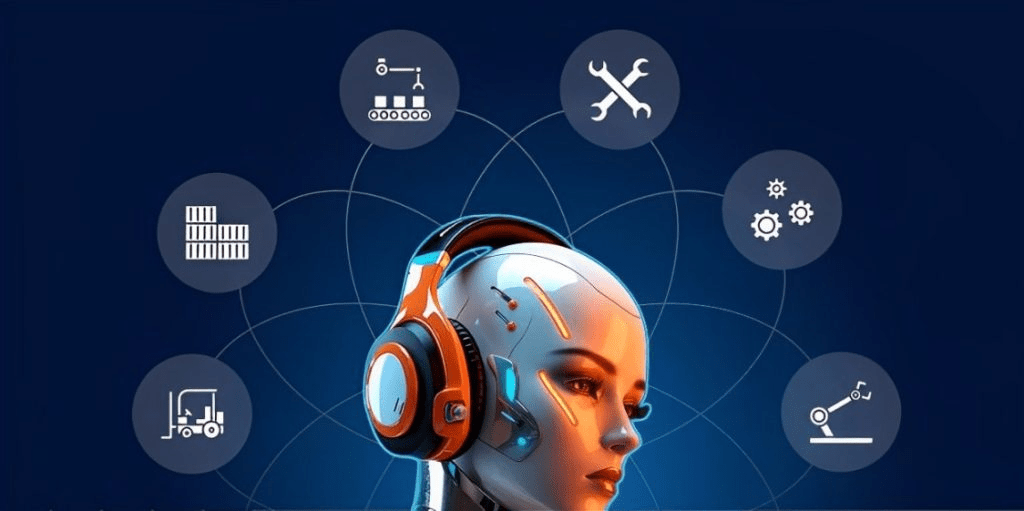
AI Use cases across various industries are mentioned below:
Healthcare
In healthcare, AI is streamlining diagnosis, treatment, and patient care. Image recognition algorithms aid in medical imaging analysis, detecting anomalies with precision. Natural Language Processing (NLP) algorithms analyze vast amounts of medical literature, assisting in diagnosis and treatment recommendations. AI-powered virtual health assistants provide personalized healthcare advice and reminders, improving patient engagement and adherence to treatment plans.
Finance
AI is revolutionizing the finance industry, powering algorithmic trading, fraud detection, and risk management. Machine Learning algorithms analyze financial data to identify patterns and predict market trends, enabling informed investment decisions. Chatbots equipped with AI respond to customer queries, providing round-the-clock support and enhancing user experience. Moreover, AI algorithms assess transactional data to detect fraudulent activities in real-time, bolstering security measures.
Manufacturing
In manufacturing, AI-driven automation optimizes production processes, enhances quality control, and reduces operational costs. Predictive maintenance algorithms analyze equipment sensor data to anticipate potential failures, minimizing downtime and maintenance costs. Robotics and Computer Vision systems collaborate with human workers, increasing efficiency and safety on the factory floor. AI-powered supply chain management systems optimize inventory levels and distribution routes, ensuring timely delivery of goods.
Retail
AI is reshaping the retail landscape by personalizing customer experiences, optimizing inventory management, and enabling predictive analytics. Recommendation engines analyze customer preferences and purchase history to offer personalized product recommendations, enhancing customer satisfaction and loyalty. AI-powered chatbots provide instant customer support, addressing inquiries and processing orders efficiently. Furthermore, Computer Vision technology enables cashier-less checkout systems, enhancing convenience and reducing waiting times for shoppers.
Transportation
In transportation, AI is driving advancements in autonomous vehicles, route optimization, and predictive maintenance. Self-learning algorithms enable autonomous vehicles to navigate complex traffic scenarios safely, reducing accidents and traffic congestion. AI-powered route optimization systems analyze traffic patterns and real-time data to identify the most efficient routes, reducing fuel consumption and carbon emissions. Predictive maintenance algorithms monitor vehicle performance metrics to detect potential issues before they escalate, minimizing downtime and maintenance costs.
Education
AI is transforming education by personalizing learning experiences, automating administrative tasks, and facilitating adaptive assessments. Intelligent tutoring systems leverage AI algorithms to deliver tailored learning materials and feedback based on individual student progress, enhancing learning outcomes. Administrative AI systems automate routine tasks such as grading assignments, scheduling classes, and managing student records, freeing up educators to focus on teaching. Additionally, AI-driven assessment tools adaptively gauge students’ knowledge and skills, providing actionable insights for personalized instruction.
Energy
In the energy sector, AI is optimizing resource management, enhancing grid efficiency, and enabling predictive maintenance. AI algorithms analyze data from sensors and smart meters to optimize energy distribution and consumption, reducing waste and costs. Predictive analytics algorithms forecast energy demand patterns, enabling utilities to allocate resources efficiently and prevent shortages. Moreover, AI-powered predictive maintenance systems monitor equipment health and performance metrics to detect potential failures, minimizing downtime and optimizing maintenance schedules.
Conclusion
The widespread adoption of AI across major industries is ushering in a new era of innovation, efficiency, and productivity. From healthcare to finance, manufacturing to retail, AI applications are transforming processes, empowering businesses to unlock new opportunities and tackle complex challenges. As AI continues to evolve, its impact on industries will only deepen, driving further advancements and reshaping the future of work and commerce. Embracing AI technologies is not just a choice but a necessity for organizations aiming to stay competitive and thrive in the digital age.
 Tech Consultancy Blogs
Leave a comment