Introduction
In an era dominated by technological advancements, Artificial Intelligence (AI) has emerged as a transformative force across various industries, and wealth management is no exception. Leveraging AI in wealth management has ushered in a new era of efficiency, personalization, and risk management. In this article, we delve into the pivotal role of AI in reshaping the landscape of wealth management, exploring its applications, benefits, and future prospects.
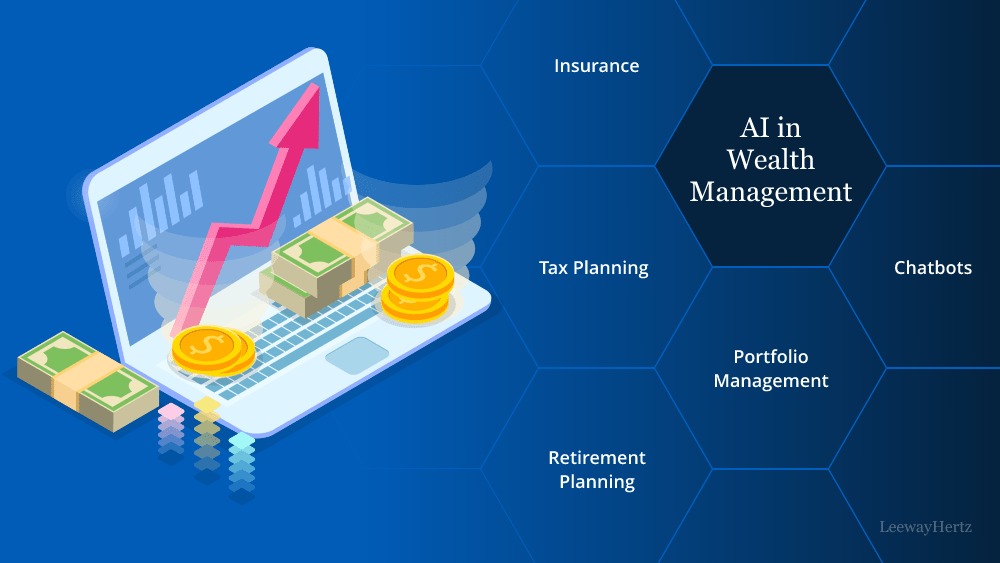
Understanding AI in Wealth Management
Enhancing Decision Making with Data Analytics
AI algorithms are adept at processing vast amounts of financial data with unparalleled speed and accuracy. Wealth management firms utilize AI-powered data analytics to analyze market trends, assess investment opportunities, and optimize portfolio performance. By extracting actionable insights from structured and unstructured data, AI empowers wealth managers to make informed decisions, thereby maximizing returns and minimizing risks for their clients.
Personalized Financial Advisory Services
One of the key advantages of AI in wealth management is its ability to deliver personalized financial advisory services. Through advanced algorithms, AI platforms analyze client preferences, risk tolerance, and financial goals to tailor investment strategies that align with individual needs. Whether it’s retirement planning, asset allocation, or tax optimization, AI-driven advisory services ensure a bespoke approach that fosters client satisfaction and long-term loyalty.
Automating Routine Tasks
Traditionally, wealth management involves a myriad of repetitive administrative tasks, such as document processing, account reconciliation, and compliance monitoring. AI technologies, including robotic process automation (RPA), streamline these processes by automating routine tasks, thus freeing up valuable time for wealth managers to focus on strategic initiatives and client interactions. By reducing manual errors and enhancing operational efficiency, AI-driven automation revolutionizes the way wealth management firms operate.
The Benefits of AI Adoption in Wealth Management
Improved Efficiency and Scalability
AI enables wealth management firms to achieve unprecedented levels of efficiency and scalability. With automated processes and intelligent algorithms, firms can handle a larger volume of clients and assets without proportionally increasing their workforce. This scalability not only drives down operational costs but also allows firms to deliver high-quality services to a broader client base, thereby enhancing their competitive advantage in the market.
Enhanced Risk Management
Risk management is a cornerstone of effective wealth management. AI equips firms with sophisticated risk assessment tools that analyze market volatility, portfolio diversification, and downside protection strategies in real time. By identifying potential risks and opportunities proactively, AI-powered risk management systems enable wealth managers to mitigate losses and preserve capital, safeguarding the financial well-being of their clients even in turbulent market conditions.
Unbiased Decision Making
Human biases can influence investment decisions, leading to suboptimal outcomes. AI, devoid of emotional biases, offers a rational approach to decision making based on data-driven analysis and algorithmic models. By eliminating subjective judgments and cognitive biases, AI ensures objective investment strategies that prioritize risk-adjusted returns and long-term wealth preservation.
Challenges and Considerations
Data Privacy and Security
The proliferation of AI in wealth management raises concerns regarding data privacy and security. As firms collect and analyze vast amounts of sensitive financial information, safeguarding client data against cyber threats and unauthorized access becomes paramount. Wealth management firms must implement robust cybersecurity measures and adhere to stringent regulatory standards to protect client confidentiality and maintain trust.
Human-AI Collaboration
While AI augments the capabilities of wealth management professionals, it cannot replace human judgment entirely. Effective utilization of AI requires a harmonious collaboration between human expertise and machine intelligence. Wealth managers must leverage AI as a tool to enhance their decision-making process rather than relying solely on automated algorithms. Moreover, ongoing training and upskilling initiatives are essential to empower professionals with the skills needed to harness the full potential of AI technology.
Future Trends and Outlook
The future of wealth management is intricately intertwined with AI-driven innovations. As AI technologies continue to evolve, we can expect further advancements in areas such as predictive analytics, natural language processing, and algorithmic trading. Moreover, the rise of AI-powered robo-advisors is democratizing access to wealth management services, making personalized financial planning more accessible to a broader spectrum of investors.
In conclusion, AI is reshaping the landscape of wealth management by enhancing decision-making processes, delivering personalized advisory services, and automating routine tasks. While the adoption of AI presents challenges such as data privacy concerns and the need for human-AI collaboration, its benefits far outweigh the risks. As wealth management firms embrace AI-driven solutions, they are poised to unlock new opportunities for growth, innovation, and client satisfaction in an increasingly digitalized world.
 Tech Consultancy Blogs
Leave a comment