Introduction
In an era where businesses are increasingly embracing digital transformation, the integration of Artificial Intelligence (AI) has emerged as a pivotal force in reshaping industries and driving competitive advantage. However, the complexity and rapid evolution of AI technologies pose significant challenges for organizations seeking to harness its full potential. This is where AI strategy consulting comes into play, offering invaluable expertise and guidance to navigate the complexities of AI adoption and implementation.
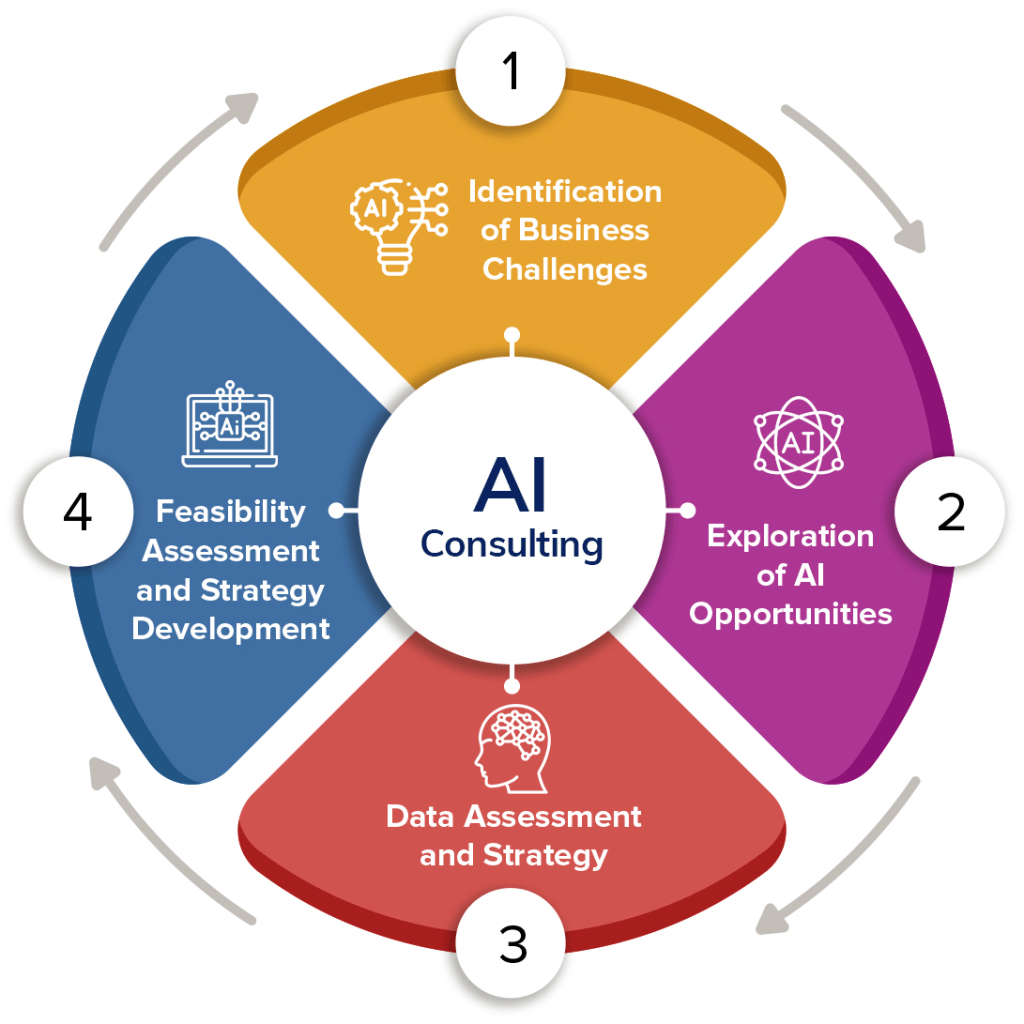
Understanding AI Strategy Consulting
AI strategy consulting involves the development and execution of comprehensive strategies to leverage AI technologies effectively within an organization. It encompasses a range of services, including AI readiness assessment, opportunity identification, technology evaluation, implementation planning, and ongoing support. The goal is to align AI initiatives with business objectives, maximize ROI, and ensure sustainable success in an increasingly AI-driven world.
The Need for AI Strategy Consulting
In today’s competitive landscape, simply deploying AI tools and technologies is not enough to gain a competitive edge. Organizations require a strategic approach that addresses their unique challenges, goals, and capabilities. AI strategy consulting provides the necessary framework to:
- Assess Readiness: Evaluate an organization’s readiness for AI adoption by analyzing its data infrastructure, technological capabilities, organizational culture, and leadership commitment.
- Identify Opportunities: Identify specific use cases and opportunities where AI can deliver the most significant impact, whether it’s enhancing customer experiences, optimizing operations, or driving innovation.
- Mitigate Risks: Anticipate and mitigate potential risks and challenges associated with AI implementation, such as data privacy concerns, ethical considerations, regulatory compliance, and workforce implications.
- Optimize Investments: Optimize investments in AI by selecting the right technologies, tools, and platforms that align with the organization’s goals, budget, and resources.
- Enable Change Management: Facilitate organizational change management to ensure seamless integration of AI into existing processes, workflows, and culture, while addressing any resistance or skepticism.
Key Components of AI Strategy Consulting
Effective AI strategy consulting encompasses several key components, each essential for success:
- Strategic Planning: Develop a clear and actionable AI strategy that aligns with the organization’s overall vision, mission, and objectives. This involves defining goals, prioritizing initiatives, and establishing metrics for success.
- Data Strategy: Create a robust data strategy to ensure access to high-quality data for AI model training, testing, and deployment. This includes data governance, data quality management, data integration, and security measures.
- Technology Assessment: Evaluate various AI technologies, frameworks, and platforms to determine the best fit for the organization’s needs, considering factors such as scalability, interoperability, ease of use, and vendor support.
- Ethical Considerations: Address ethical considerations and biases inherent in AI algorithms and applications, ensuring fairness, transparency, and accountability throughout the AI lifecycle.
- Skills Development: Identify skill gaps within the organization and provide training and development opportunities to build AI capabilities among employees, from data scientists and engineers to business stakeholders.
- Governance and Compliance: Establish governance frameworks and compliance mechanisms to ensure responsible AI practices, including risk management, regulatory compliance, and ethical guidelines.
The Role of AI Strategy Consultants
AI strategy consultants play a crucial role in guiding organizations through the complex journey of AI adoption and transformation. They bring deep expertise, industry insights, and best practices to:
- Educate and Advocate: Educate organizational leaders and stakeholders about the potential of AI and advocate for its strategic importance in driving innovation, growth, and competitiveness.
- Assess and Analyze: Conduct comprehensive assessments and analysis of the organization’s current state, market dynamics, competitive landscape, and technological trends to identify opportunities and challenges.
- Design and Implement: Design customized AI strategies and roadmaps tailored to the organization’s unique needs, goals, and constraints, and support their implementation through hands-on guidance and support.
- Evaluate and Iterate: Continuously evaluate the performance and impact of AI initiatives, iterate strategies as needed, and incorporate lessons learned to drive continuous improvement and value realization.
Conclusion
In an increasingly digital and data-driven world, AI strategy consulting has become indispensable for organizations seeking to unlock the full potential of artificial intelligence. By providing strategic guidance, expertise, and support, AI strategy consultants empower businesses to navigate the complexities of AI adoption, mitigate risks, optimize investments, and drive sustainable success in the era of AI.
As organizations continue to embrace AI as a strategic imperative, the role of AI strategy consulting will only grow in importance, helping businesses stay ahead of the curve and capitalize on the transformative power of AI for years to come.
 Tech Consultancy Blogs
Leave a comment